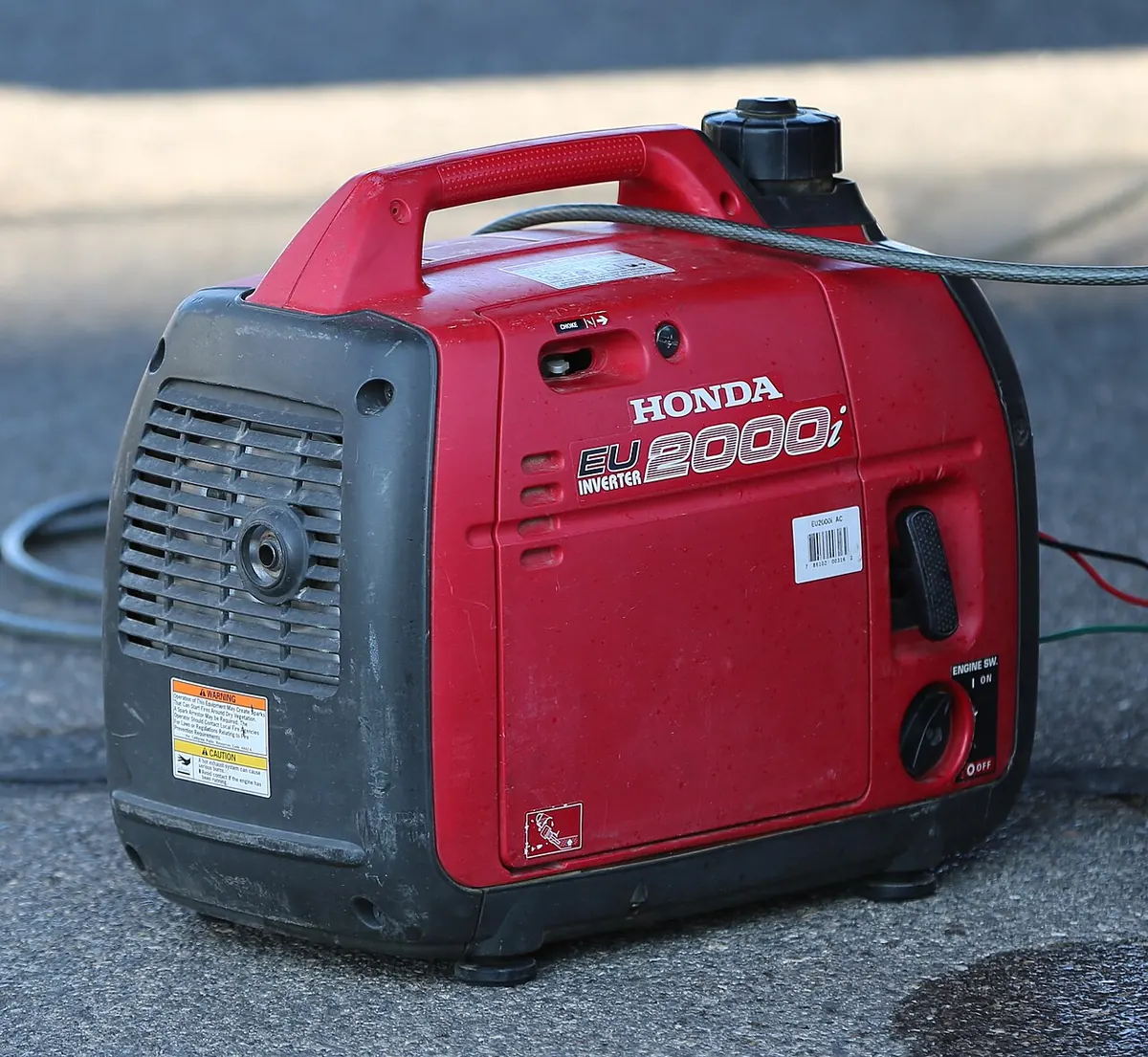
 Photo TaurusEmerald, CC BY-SA 4.0

Running a generator
Sizing a generator, where it sits, fuel and oil, and the two mistakes that kill people: running it inside and feeding the cabin through a wall plug.
What you need
- A generator sized to what you will run at once, with some to spare
- Outdoor rated extension cords heavy enough for the load, or a transfer switch put in by an electrician
- A battery carbon monoxide alarm inside the cabin
- Approved fuel cans, and fuel stabilizer for gas that sits
- Spare oil, a spark plug and the manual
How
- Add up the running watts of everything you will run at the same time. Then add the starting surge of the biggest motor, a pump or a fridge, which can be two or three times its running watts.
- Pick an inverter generator for electronics and for quiet. It makes cleaner power and burns less fuel at light load.
- Set it outside on level ground, at least 6 metres from the cabin, with the exhaust pointed away from doors, windows and vents.
- Keep rain off it with a cover made for it, open on the sides. Never box it in.
- Start it with nothing plugged in, let it settle, then add the loads one at a time, the biggest first.
- Shut it off and let it cool before you refuel. Gas on a hot engine is a fire.
- Change the oil on the schedule in the manual, and early on a new engine. Check the oil every time you fuel.
Do and don't
Do
- Run it for a while every month or two under some load, so it starts when you need it.
- Put stabilizer in gas that will sit, or run the carburetor dry before you store it.
- Store fuel away from the cabin and the generator, out of the sun.
Don't
- Never run a generator inside, or in a porch, shed, garage or crawlspace, even with the door open.
- Never plug a generator into a wall outlet to feed the cabin. That backfeeds the wiring and can kill a lineworker down the road.
- Do not run a cord under a rug or through a door that pinches it.
Watch for
Danger
- Carbon monoxide has no smell. Headache, dizziness or sleepiness in more than one person means get everyone outside now.
- Exhaust drifts in through open windows and vents. Wind changes, so keep checking where it is going.
- A generator on wet ground, handled with wet hands, can shock you. Keep it dry and follow the manual on grounding.
Notes
A generator is the backup, not the power plant. Batteries and panels do the daily work, and the generator fills the dark weeks and runs the big tools.
See Cabin power, Propane and carbon monoxide and Carbon monoxide poisoning.
Updated 2026-09-29
Related
 Propane and carbon monoxide
Off Grid
Running propane at a cabin without gassing yourself, and the alarms that tell you before you feel it.
 Cabin power
Off Grid
Battery, panel and inverter, and how much you actually need.
 Camp stoves and fuel
Camp and Cabin
Which stove for which trip, and the rules that keep it from killing you.
 Closing and opening the cabin
Off Grid
Shutting the cabin down for the winter so nothing freezes, rots or moves in, and opening it again in the spring without a nasty surprise.