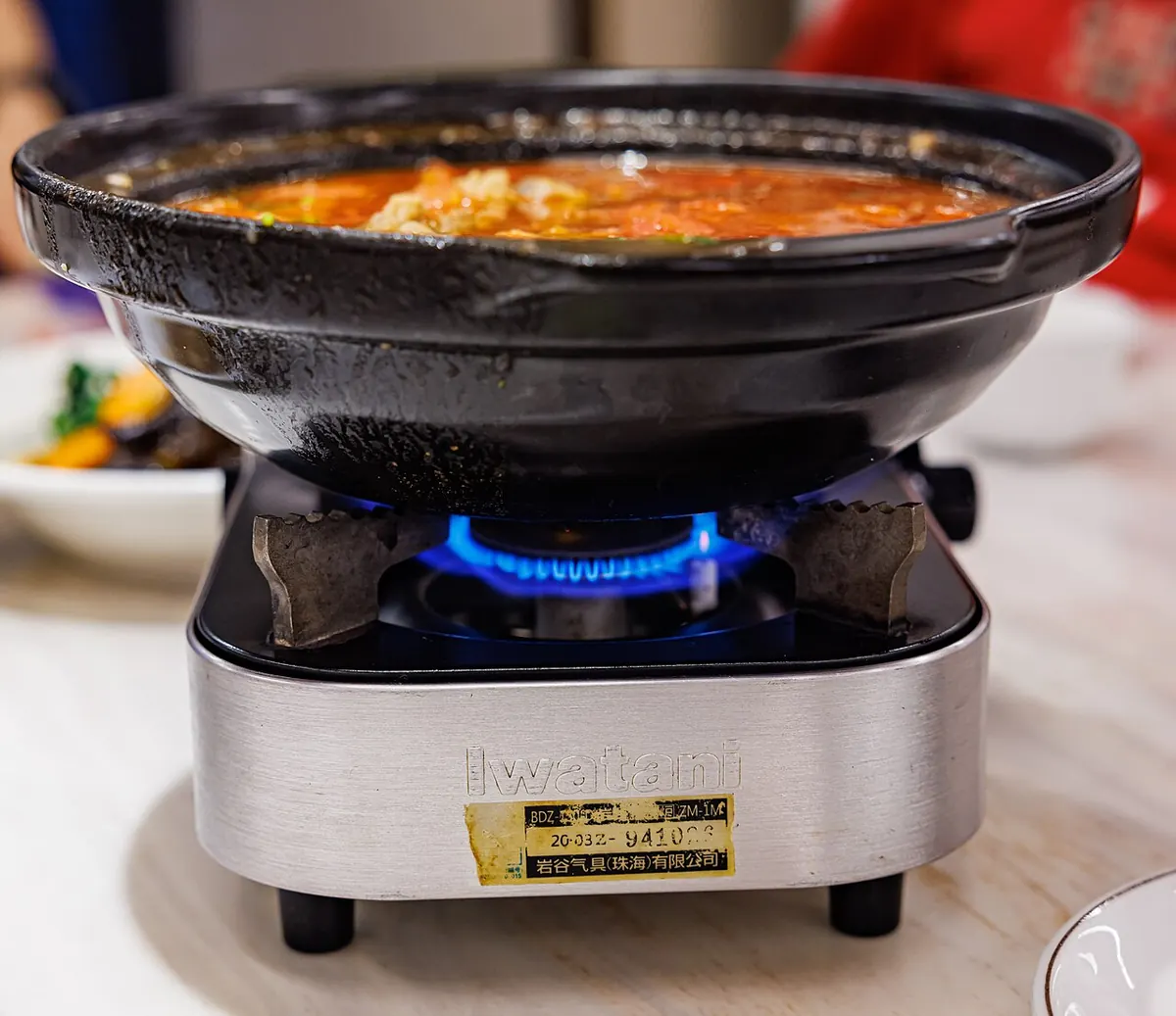
 Photo Dinkun Chen, CC BY-SA 4.0

Camp stoves and fuel
Which stove for which trip, and the rules that keep it from killing you.
What you need
- A canister stove for three seasons, a liquid fuel stove for hard cold
- More fuel than the trip needs, by a third
- A windscreen and a solid flat base
- A lighter and matches, both
- A pot lid, which cuts boil time more than anything else you own
How
- Set the stove on level ground away from the tent door, clear of dry grass and low branches.
- Light it outside. Every time. A stove flares on the first light and a tent goes up in seconds.
- Keep the canister warm in cold weather. Inside your coat while you walk, then in a pocket of the pack, never in the snow.
- Prime a liquid fuel stove in the open, let the primer burn down, then open the valve.
- Fill fuel bottles away from any flame, wipe the spill, and let the vapour go before you light anything.
- Shut it down and let it cool before it goes back in the pack.
Watch for
Danger
- A stove burning in a tent or a closed cabin makes carbon monoxide. It has no smell and it puts you to sleep.
- A canister that feels cold and weak is not empty. It is too cold to boil off.
- A windscreen wrapped tight around a canister stove can overheat the canister.
- Fuel on your hands in the cold takes heat straight out of the skin.
Notes
Cook under a tarp with both ends open if the weather is bad. Never inside the sleeping space.
Updated 2026-09-11
Related
 Firewood for the stove
Camp and Cabin
What burns, how to season it, and how to stack it so it stays dry.
 Camp kitchen and dishes
Camp and Cabin
Where to cook, how to keep it clean, and what to do with the washing water so nothing gets sick and nothing comes visiting.
 Carbon monoxide poisoning
First Aid
The gas you cannot see or smell. How it gets into a tent, a hut, a truck or a boat, the signs, and what to do.
 Keeping clean in camp
Camp and Cabin
Washing, the toilet and clean hands, so a trip does not end with a sick camp.