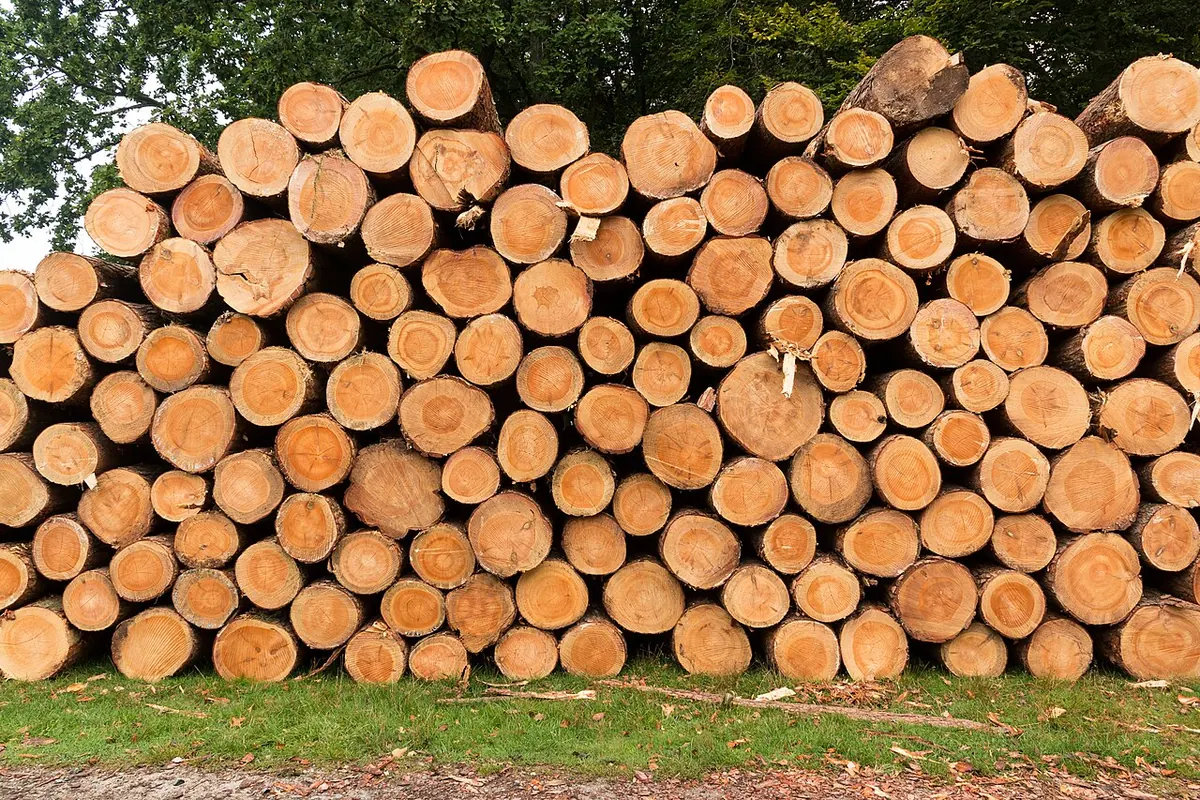
 Photo Dietmar Rabich, CC BY-SA 4.0

Firewood for the stove
What burns, how to season it, and how to stack it so it stays dry.
What you need
- Standing dead wood or seasoned rounds
- A saw and a splitting axe
- Pallets or poles to keep the stack off the ground
- A tarp for the top of the stack only
- Kindling and dry bark or birch rind
How
- Take standing dead over anything on the ground. Wood on the ground drinks.
- Cut to stove length before you split. Split small: thin pieces dry in a season, big rounds do not.
- Stack it off the ground, in the sun and the wind, with air through the rows.
- Cover the top of the stack and leave the sides open. A tarp over the whole thing traps the damp in.
- Bring a day of wood inside the night before so it is warm and dry when the stove wants it.
- Burn hot and short rather than smouldering all evening. A smouldering stove packs the pipe with creosote.
Watch for
Danger
- Green wood hisses at the ends and burns cold.
- Softwood spits sparks. Keep the screen up and a pot of water handy.
- Never burn painted, treated or salt soaked wood in a cabin stove.
- Check the pipe and clean it before the first cold night, not after the chimney fire.
Notes
A year ahead is the rule. What you cut this fall heats you next fall, and this fall you burn what you cut last year.
Updated 2026-09-05
Related
 Camp stoves and fuel
Camp and Cabin
Which stove for which trip, and the rules that keep it from killing you.
 Camp kitchen and dishes
Camp and Cabin
Where to cook, how to keep it clean, and what to do with the washing water so nothing gets sick and nothing comes visiting.
 Keeping clean in camp
Camp and Cabin
Washing, the toilet and clean hands, so a trip does not end with a sick camp.
 Lanterns and headlamps
Camp and Cabin
Light for camp and the trail, what runs it, and keeping it going when the nights are long and cold.