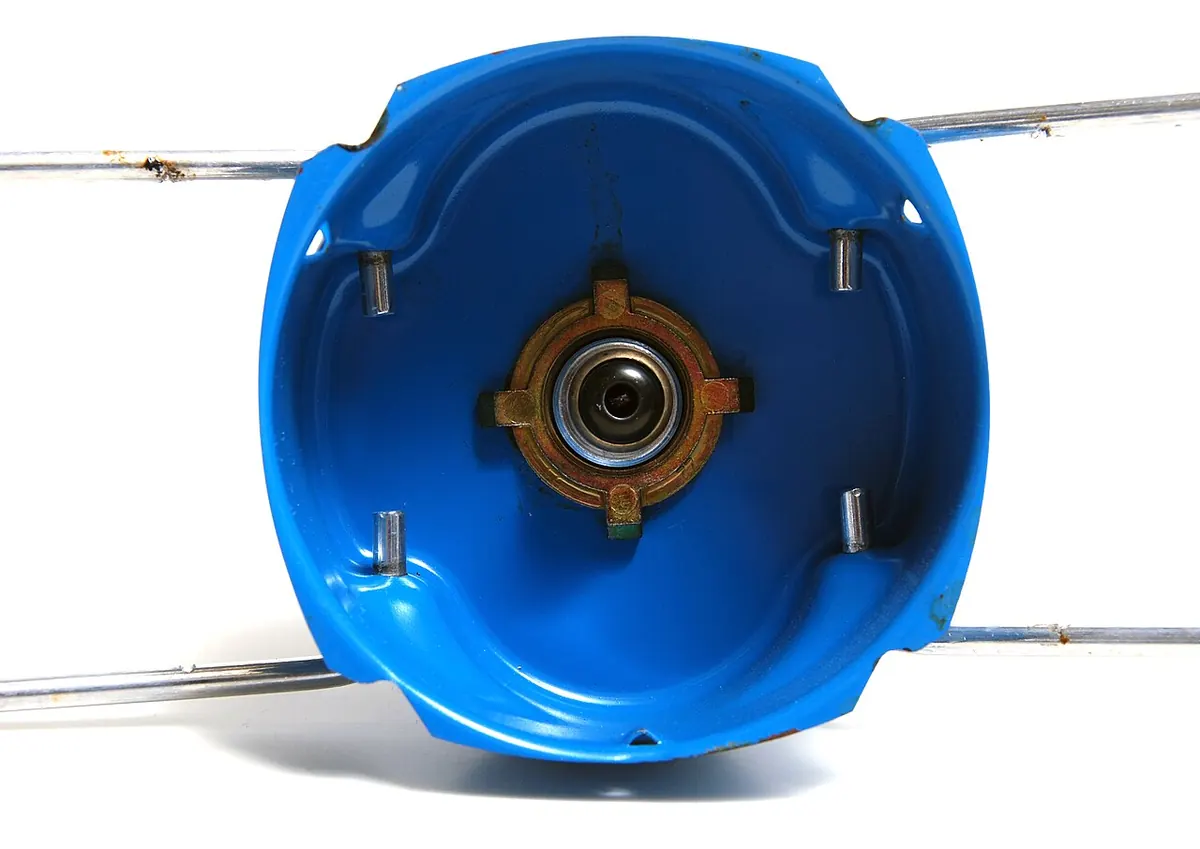
 Photo Lilly_M, CC BY-SA 3.0

Propane and carbon monoxide
Running propane at a cabin without gassing yourself, and the alarms that tell you before you feel it.
What you need
- A carbon monoxide alarm with a digital readout, on every level where anyone sleeps
- A propane alarm mounted low, because propane is heavier than air and pools on the floor
- Spare batteries for both, kept in the cabin
- Soapy water in a spray bottle for leak testing
- A pipe wrench that fits the tank fitting
- The date stamp on the tank collar checked, ten years from manufacture on a refillable cylinder
How
- Keep every propane cylinder outside, upright, on a level base, and never in a porch, crawl space or under the floor.
- Run the line into the building through a proper fitting, with the shutoff where you can reach it from outside.
- After any change to a fitting, brush or spray soapy water on every joint with the gas on. Bubbles mean a leak. Shut it off and fix it before you light anything.
- Light appliances with the vent working and a window cracked. A yellow, lazy flame means poor burning and more carbon monoxide. A good propane flame is blue.
- Test both alarms on the first day of every trip, and when you open the cabin for the season.
- Shut the tank at the valve when you leave, not just at the appliance.
Do and don't
Do
- Trust the alarm over how you feel. Carbon monoxide has no smell and no colour.
- Get everyone outside into fresh air first, then open the doors and windows from outside, then shut the fuel off.
- Have any unvented heater burning only while someone is awake.
Don't
- Do not run a generator, a camp stove, a barbecue or a charcoal fire inside a cabin, tent, porch or garage, ever.
- Do not heat a space with a cook stove or an oven.
- Do not sleep with an unvented propane heater running.
- Do not store a spare cylinder indoors over the winter.
Watch for
Danger
- Headache, dizziness, sickness, sleepiness and poor judgement in more than one person at once, or in the dog as well, is carbon monoxide until proved otherwise. Get out.
- A propane smell at floor level means gas has pooled. No switches, no lights, no flame. Open the door, shut the tank, leave, and let it air.
- Ice or heavy snow blocking a vent or chimney sends the exhaust back inside.
- A cylinder valve left cracked open while the appliance is off will fill a small building overnight.
Notes
Newfoundland cabins get shut tight in winter and that is exactly when the exhaust has nowhere to go. The alarm is worth more than any amount of care.
Carbon monoxide alarms wear out. Most carry an end of life date of seven to ten years on the back. Read it and replace it.
Updated 2026-09-20
Related
 Closing and opening the cabin
Off Grid
Shutting the cabin down for the winter so nothing freezes, rots or moves in, and opening it again in the spring without a nasty surprise.
 Heating with wood
Off Grid
Running a wood stove at the cabin: dry wood, a clean chimney, ashes put away right, and what to do if the chimney catches.
 Running a generator
Off Grid
Sizing a generator, where it sits, fuel and oil, and the two mistakes that kill people: running it inside and feeding the cabin through a wall plug.
 Water and waste at a cabin
Off Grid
Getting water in, keeping it from freezing, and putting the dirty water and the rest out of the way.