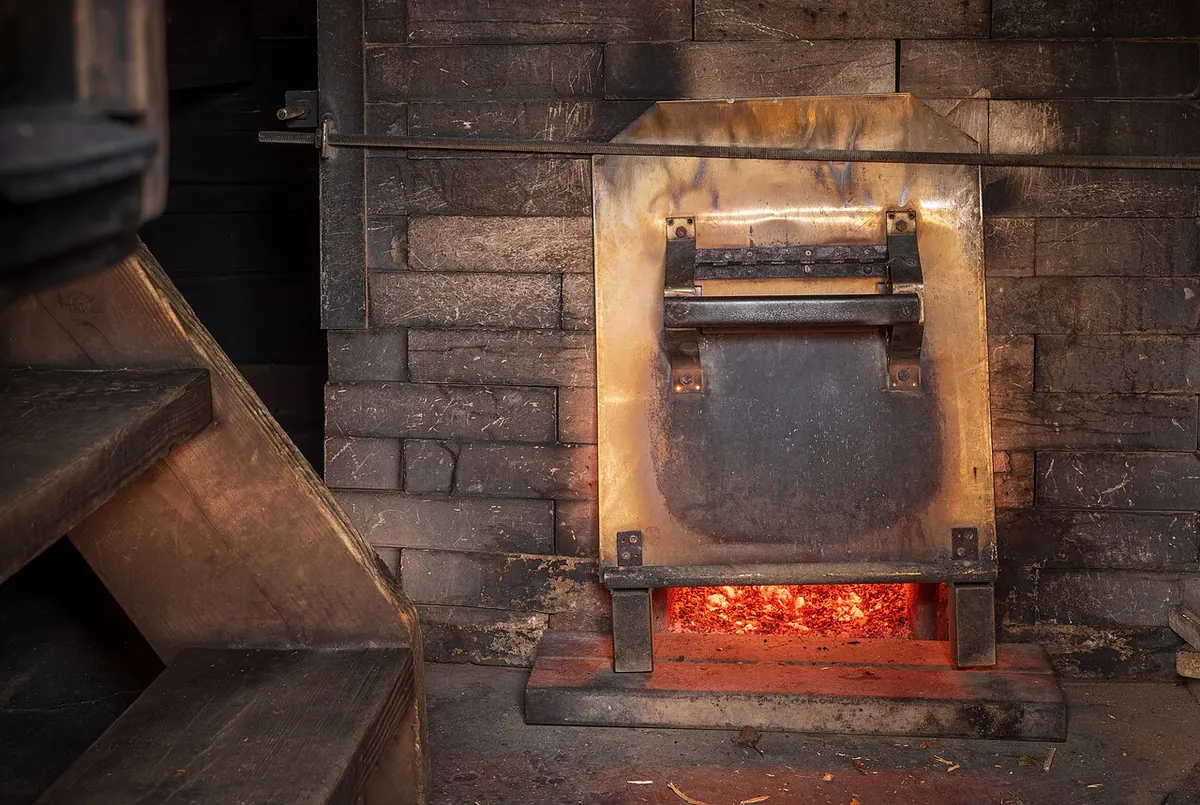
 Photo Ximonic (Simo Räsänen), CC BY-SA 4.0

Heating with wood
Running a wood stove at the cabin: dry wood, a clean chimney, ashes put away right, and what to do if the chimney catches.
What you need
- A stove and chimney installed to code, with the clearances on the stove's label
- Dry, seasoned firewood. See Firewood for the stove.
- Smoke and carbon monoxide alarms, tested
- A metal ash bucket with a lid, and a small shovel
- A fire extinguisher by the door
How
- Burn dry wood only, split and stacked under cover for at least six months. Dry wood cracks at the ends and clunks when two pieces hit.
- Light small, with kindling and a few small splits, the draft wide open, until the chimney is warm.
- Add bigger wood once it is burning hard. Give each new load a few minutes of open draft to catch before you turn it down.
- Burn hot for part of every day. Long low smouldering burns build creosote in the chimney.
- Take ashes out when they build up. Shovel them into the metal bucket, lid on, and set it outside on bare ground or stone.
- Clean the chimney at least once a year, and more if you burn a lot.
- Have the stove and chimney inspected. In Canada a WETT certified inspector does it, and many insurers want it.
Do and don't
Do
- Keep wood, clothes and anything that burns well back from the stove.
- Look at the smoke outside. Thin and white is good. Thick and dark means wet wood or not enough air.
- Test both alarms every time you open the cabin.
Don't
- Do not burn garbage, painted or treated wood, or plastic.
- Do not start a fire with gasoline or any fuel.
- Do not put ashes in a paper bag, a cardboard box or against the wall. Coals stay live for days.
Watch for
Danger
- A chimney fire roars like a train, the stove pipe glows, and sparks come out the top. Shut the stove air, get everyone out, and call 911.
- A stove that smokes into the room, or a headache that clears when you go outside, can mean carbon monoxide. Get out and air it. See Propane and carbon monoxide.
- Hot stoves burn skin in a moment. Keep children and pets back.
Notes
A wood stove in a small cabin on a cold night is as good as it gets, and it is the thing most likely to burn the cabin down. Both are true.
A stove top fan and a kettle of water on the stove even out the heat and put a bit of moisture back in the air.
Updated 2026-09-22
Related
 Closing and opening the cabin
Off Grid
Shutting the cabin down for the winter so nothing freezes, rots or moves in, and opening it again in the spring without a nasty surprise.
 Propane and carbon monoxide
Off Grid
Running propane at a cabin without gassing yourself, and the alarms that tell you before you feel it.
 Water and waste at a cabin
Off Grid
Getting water in, keeping it from freezing, and putting the dirty water and the rest out of the way.
 Cabin power
Off Grid
Battery, panel and inverter, and how much you actually need.