Wolf Wilds › Signals and Rescue
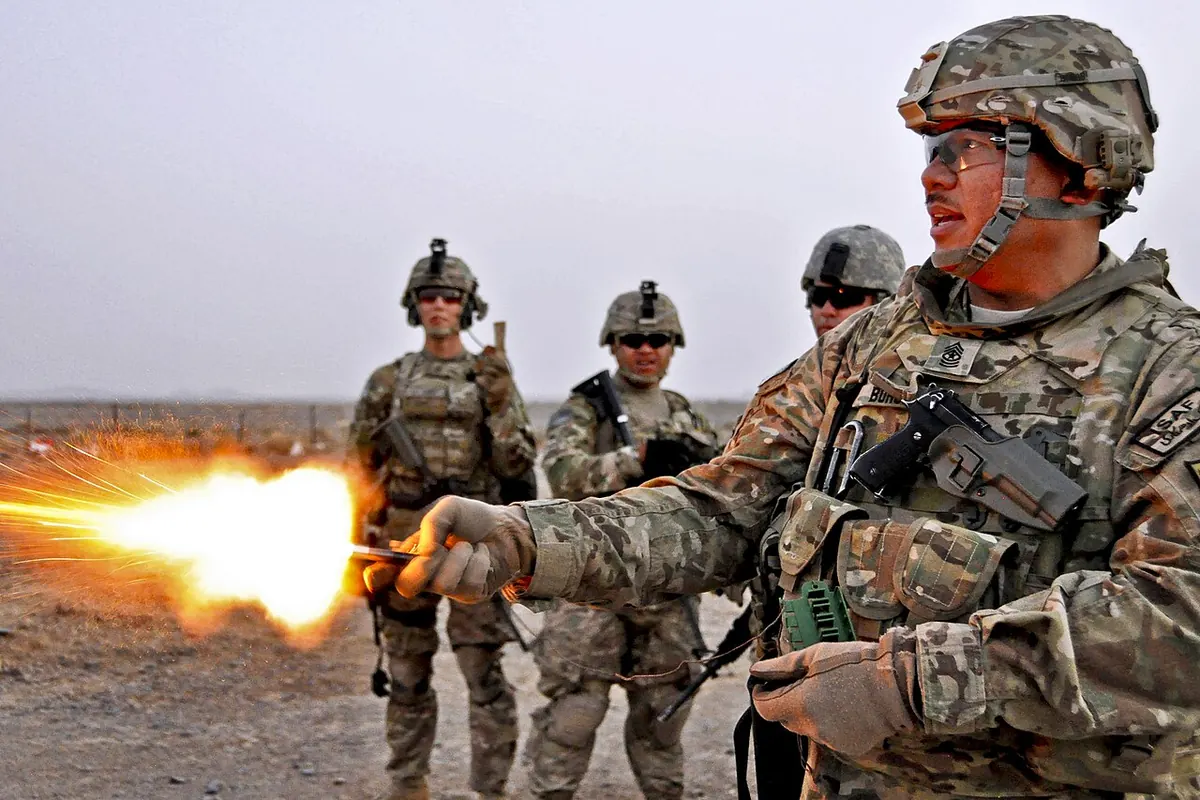 Photo The U.S. Army, Public domain

Flares and strobes
Signals that show up at night and across water, how to use them, and when to save them.
What you need
- Handheld flares for close work, when a boat or a crew is near
- Aerial flares for distance, when help is far off or out of sight
- A smoke signal for daytime on the water
- A waterproof strobe clipped to your life jacket or pack strap
- A dry, easy to reach box or pocket to keep them in
How
- Read the instructions on each flare at home, in daylight, before you ever need it.
- Wait until you can see or hear help coming. A flare no one sees is a flare wasted.
- Hold a handheld flare out at arm's length, downwind, and pointed away from the boat and from people.
- Fire an aerial flare up and slightly downwind, never straight overhead.
- Fire a second one a minute or two later so they can fix where you are.
- Turn the strobe on and leave it on once you need to be found at night. It runs for hours.
Do and don't
Do
- Check the expiry date stamped on every flare before each season and replace the old ones.
- Keep flares where you can reach them in a capsize, not buried in the bottom of a pack.
- Keep your eyes off a burning handheld flare. It will blind your night vision.
Don't
- Do not fire a flare as a test or a joke. It sets off a real search.
- Do not fire flares in dry woods or near fuel.
- Do not throw away old flares in the garbage. Ask where to return them.
Watch for
Danger
- A handheld flare drips burning slag hot enough to burn through a boat, a jacket and skin.
- An aerial flare fired straight up can come back down on you still burning.
- Expired flares can fail to light or light badly, right when you need them.
Notes
A strobe on your life jacket costs little and is the one signal that keeps working after you are in the water.
Flares go with a whistle, a mirror and a beacon, not instead of them. See Getting found and Radios and beacons.
Canada sets rules for which flares a boat must carry. Check the current rules for your boat before you go.
Updated 2026-09-28
Related
 Calling for help on a phone
Signals and Rescue
Getting a call through from the woods, what to tell the 911 operator, and keeping the phone alive until they reach you.
 Getting found
Signals and Rescue
Whistle, mirror, fire and beacon, and what searchers are actually looking for.
 Ground to air signals
Signals and Rescue
Big shapes on open ground that a plane or helicopter can read, and the few codes worth knowing.
 Leaving a trip plan
Signals and Rescue
The piece of paper that starts the search before anybody misses you.