Wolf Wilds › Signals and Rescue
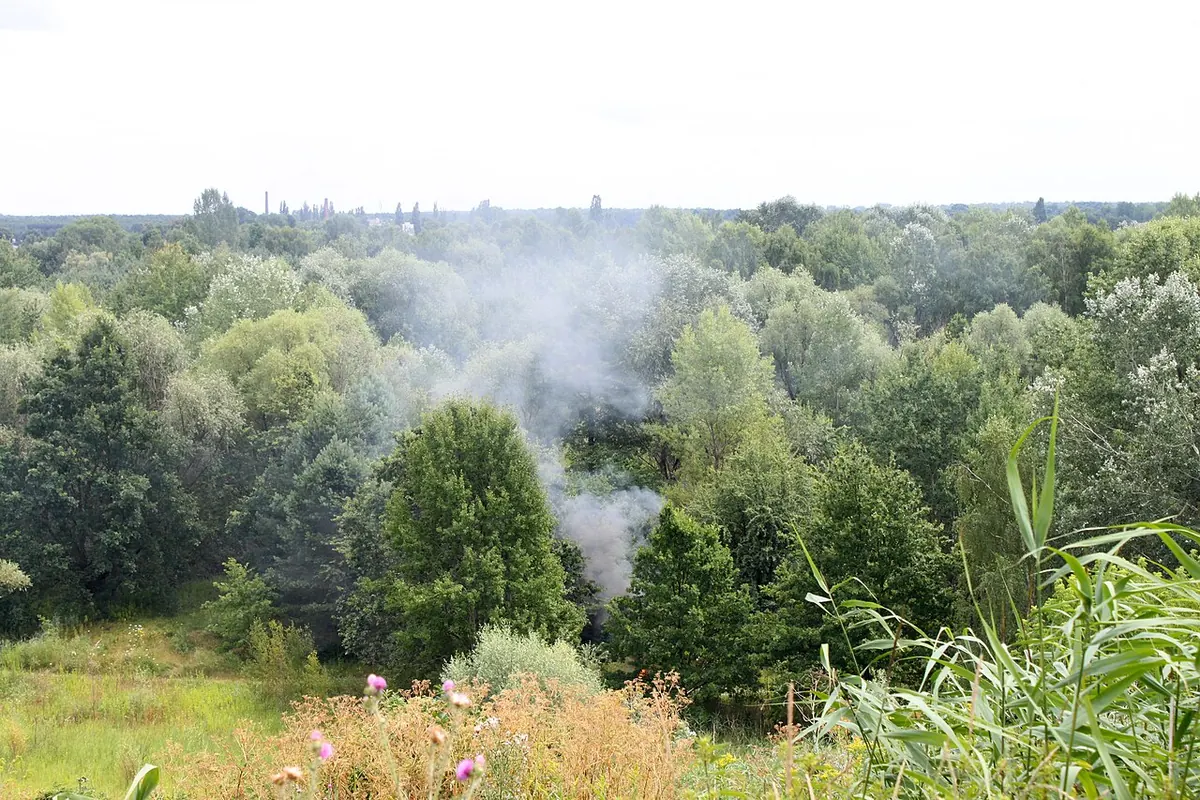 Photo Crusier, CC BY-SA 3.0

Ground to air signals
Big shapes on open ground that a plane or helicopter can read, and the few codes worth knowing.
What you need
- An open place a pilot can see: a bog, a clearing, a shoreline, a frozen pond
- Material that stands out: spruce boughs on snow, rocks or logs on moss, bright gear on anything
- Something to make smoke: green boughs ready beside a fire
- Your orange gear, space blanket or tarp
How
- Pick the most open ground near you. Searchers fly over clearings, shorelines and ridges.
- Make each shape big, at least three metres long, with lines as wide as you can manage.
- Use contrast: dark boughs on snow, pale rocks on dark moss, a trench stamped in snow that throws a shadow.
- Lay one clear signal. V means we need help. X means we need medical help. An arrow shows the way you went.
- Three of anything reads as distress: three fires, three piles, three whistle blasts.
- Keep a fire laid and ready with green boughs beside it. Light it and smother it with the boughs when you hear an aircraft.
- When the aircraft sees you it will usually rock its wings or circle. Stay where you are.
Do and don't
Do
- Build the signal close to where you are sheltering so you are there when help comes.
- Leave the arrow if you have to move, pointing the way you went.
- Wave both arms over your head if you need help. One arm means all is well.
Don't
- Do not build the signal under trees. From the air, forest hides everything.
- Do not wander away from a good signal to look for help.
- Do not light the fire where it can run into the woods or the peat.
Watch for
Danger
- Fresh snow buries a snow signal overnight. Stamp it out again every morning.
- A signal fire in dry weather can start a forest fire. Clear to bare ground and keep water handy.
- Waving casually at a passing aircraft can look like all is well. Use the two arm signal.
Notes
The letters come from the international emergency code that pilots are taught. You do not need them all. V, X and an arrow cover almost everything.
If you can, write SOS as well. Every pilot knows it.
Updated 2026-09-22
Related
 Signal fires and smoke
Signals and Rescue
A fire laid ready in the open, lit the moment you hear an aircraft: smoke by day, flame by night.
 Calling for help on a phone
Signals and Rescue
Getting a call through from the woods, what to tell the 911 operator, and keeping the phone alive until they reach you.
 Flares and strobes
Signals and Rescue
Signals that show up at night and across water, how to use them, and when to save them.
 Getting found
Signals and Rescue
Whistle, mirror, fire and beacon, and what searchers are actually looking for.