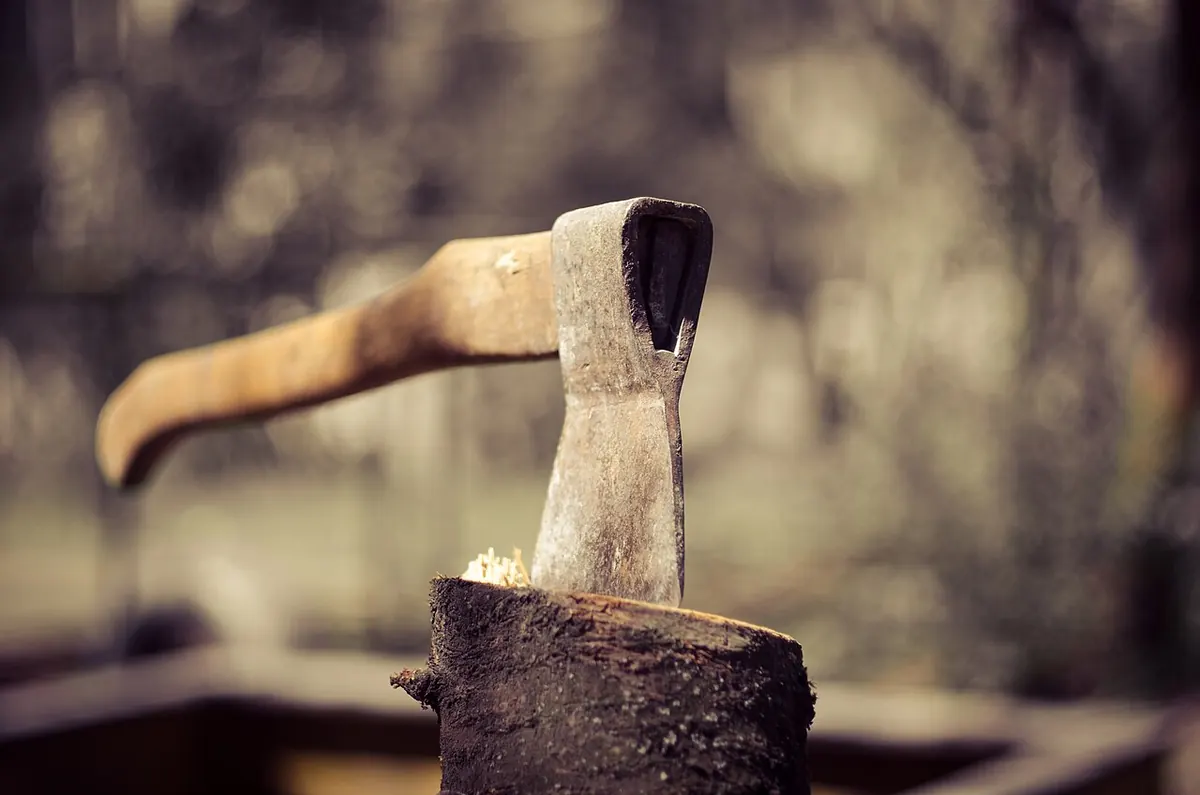
 Photo Serhio Magpie, CC BY 4.0

Sharpening an axe
A file to shape the edge, a stone to finish it, and a few strokes with the stone every day in camp to keep it biting.
What you need
- A mill bastard file, 8 or 10 inches, with a handle
- A file guard, or a piece of leather over the end of the file to protect your knuckles
- A round axe stone with a coarse side and a fine side
- Gloves
- A vise, or a log with the axe head braced against a stake so it cannot move
- Oil and a rag
How
- Brace the axe so the edge faces you and the head cannot shift or roll.
- Look down the edge in good light. Bright spots on the very edge are dull, rolled or chipped places.
- File into the edge, pushing the file from the edge back toward the eye with the guard between your hand and the steel. A file cuts only on the push. Lift it on the way back.
- Work a band two or three centimetres wide along the whole edge, keeping the curve and the angle the axe came with.
- File until you can feel a small burr along the full length of the other side with your finger, drawn across the edge and never along it. Then turn the axe and do the other side the same.
- Take the burr off with the coarse side of the stone, wet, in small circles on each side, then finish with the fine side.
- Test it on a piece of dry softwood. A sharp axe bites in clean and does not bounce.
- Wipe the head dry and give it a light coat of oil before it goes back in its sheath.
Do and don't
Do
- Carry the stone in camp and give the edge a few strokes each day. Use the file only when the edge is chipped or badly rolled.
- Clean the file teeth with a wire brush or a file card as they clog.
- Take the same number of strokes on each side so the edge stays centred.
Don't
- Do not use a bench grinder. It heats the edge and draws the temper, and soft steel will not hold an edge.
- Do not file toward your bare hand, or without a guard on the file.
- Do not test the edge by running your thumb along it.
Watch for
Danger
- The file slipping off the edge is how most people cut themselves sharpening. Wear gloves and keep the guard on.
- Blue or straw coloured steel near the edge means it has been overheated and has lost its temper.
- A deep nick from a rock or a nail must be filed back past the bottom of the nick, or it tears the next cut.
- Frozen wood is hard on a thin edge. Warm the head before heavy work in the cold.
Notes
A dull axe glances off the wood and a glancing axe finds a leg. A sharp axe is the safer axe.
See Axe and saw work for using it, and Sharpening a knife for the finer edge.
Updated 2026-09-29
Related
 Sharpening a knife
Tools and Blades
Getting a working edge back with a stone and a bit of patience.
 Axe and saw work
Tools and Blades
Cutting wood without cutting yourself, and keeping the edges alive.
 Batoning and feather sticks
Tools and Blades
Splitting small wood with a knife and a stick, and carving curls that catch a flame when everything else is wet.
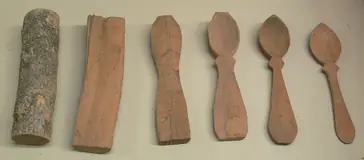 Carving camp gear
Tools and Blades
Tent pegs, a pot hook, a spoon and a pot lifter, made with a knife and a bit of wood.