Wolf Wilds › Food and Foraging
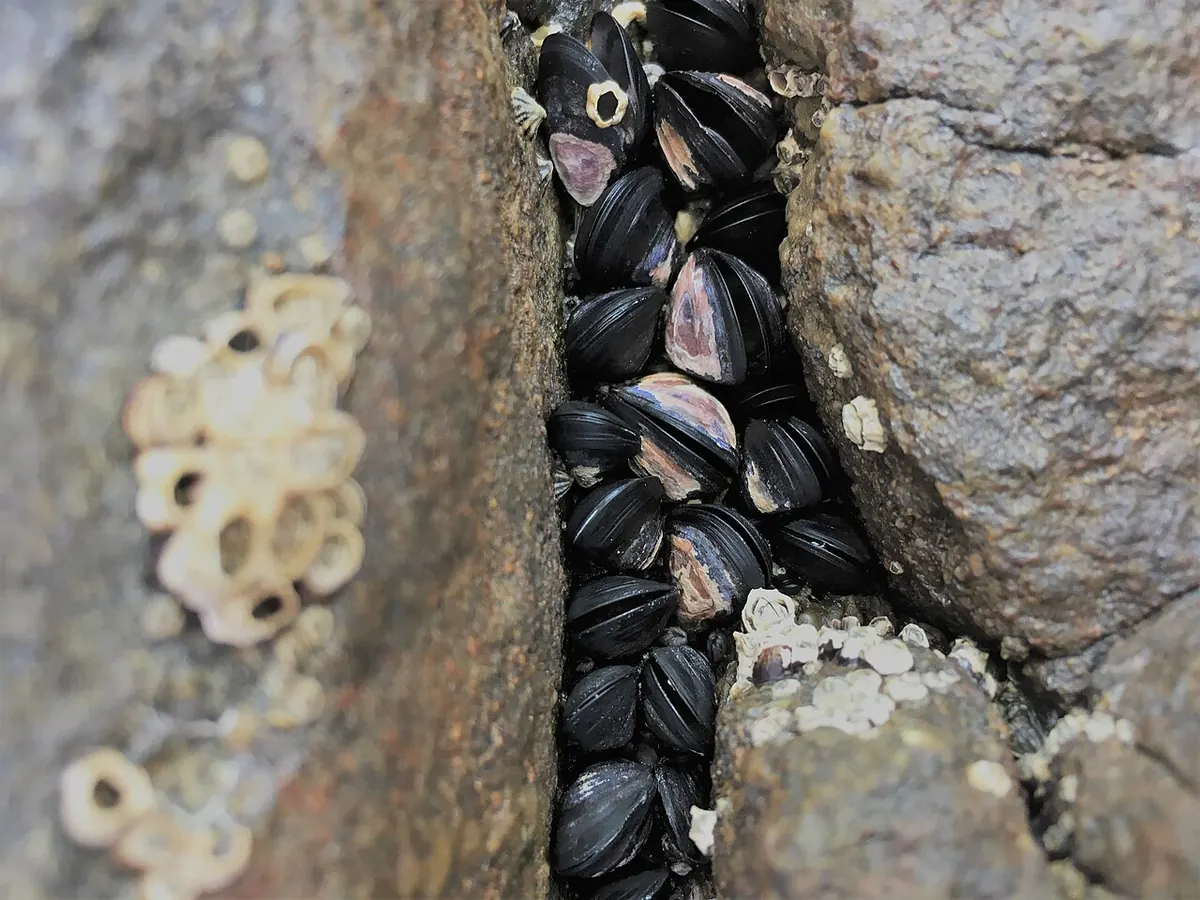 Photo Kehropaias, CC BY-SA 4.0

Mussels and seaweed
What the shore gives you on this island, and the one thing that decides whether you eat it.
What you need
- A mesh bag or a bucket
- A knife or a scraper
- A tide table for the day
- Boots with grip, because wet rockweed is ice
- A pot and fresh water for cooking
- The current shellfish closure list for the area, checked before you pick
How
- Check the closures first. Areas get closed for shellfish poisoning and for pollution, and a closure is not something you can see, smell or taste on the mussel.
- Go at low tide, and go in the cold months if you have the choice. Shellfish are better and safer when the water is cold.
- Pick mussels that are shut, or that shut when you tap them. Leave any that gape open and stay open.
- Take from clean open water, never near a wharf, an outfall, a slipway or a brook running off a road.
- Rinse, scrub, and pull the beard off just before cooking.
- Steam them in a covered pot in a little water for five minutes, until they open. Throw out any that stay shut.
- For kelp and dulse, cut the blades above the holdfast with a knife so the plant lives, rinse them in seawater, and dry them on a line or a warm rock.
Do and don't
Do
- Take only what you will eat that day.
- Keep the catch cool and covered on the way back.
- Leave the small ones and leave the holdfasts so the shore grows back.
Don't
- Do not pick anywhere under a closure, whatever the shellfish looks like. Cooking does not destroy shellfish toxins.
- Do not take mussels from water that gets warm and still in summer.
- Do not turn your back on the water on a shore ledge, and do not get cut off by the rising tide.
Watch for
Danger
- Paralytic shellfish poisoning starts as tingling round the lips within minutes to hours and can stop your breathing. It is an emergency. Call 911 and go.
- Slippery rock and swell take people off the shore every year. One hand for the rock, always.
- Anything picked below a road culvert, a wharf or a sewer outfall is not food.
Notes
Blue mussels, dulse and kelp are the easy three on a Newfoundland shore and none of them run away.
The closure list is the whole safety system. Everything else on this page is technique.
Updated 2026-09-20
Related
 Berries worth picking
Food and Foraging
The berries worth filling a bucket with, and the rule that keeps you safe.
 Bottled moose
Food and Foraging
Putting up moose in glass jars the safe way, with a pressure canner, so it keeps on the shelf all year.
 Jerky and dried meat
Food and Foraging
Lean moose, caribou or beef cut thin, heated safe, and dried into light food that rides in a pack.
 Keeping food cold
Food and Foraging
Coolers, snowbanks and brooks: keeping meat, fish and milk safe with no fridge, and when to throw it out.