Wolf Wilds › Food and Foraging
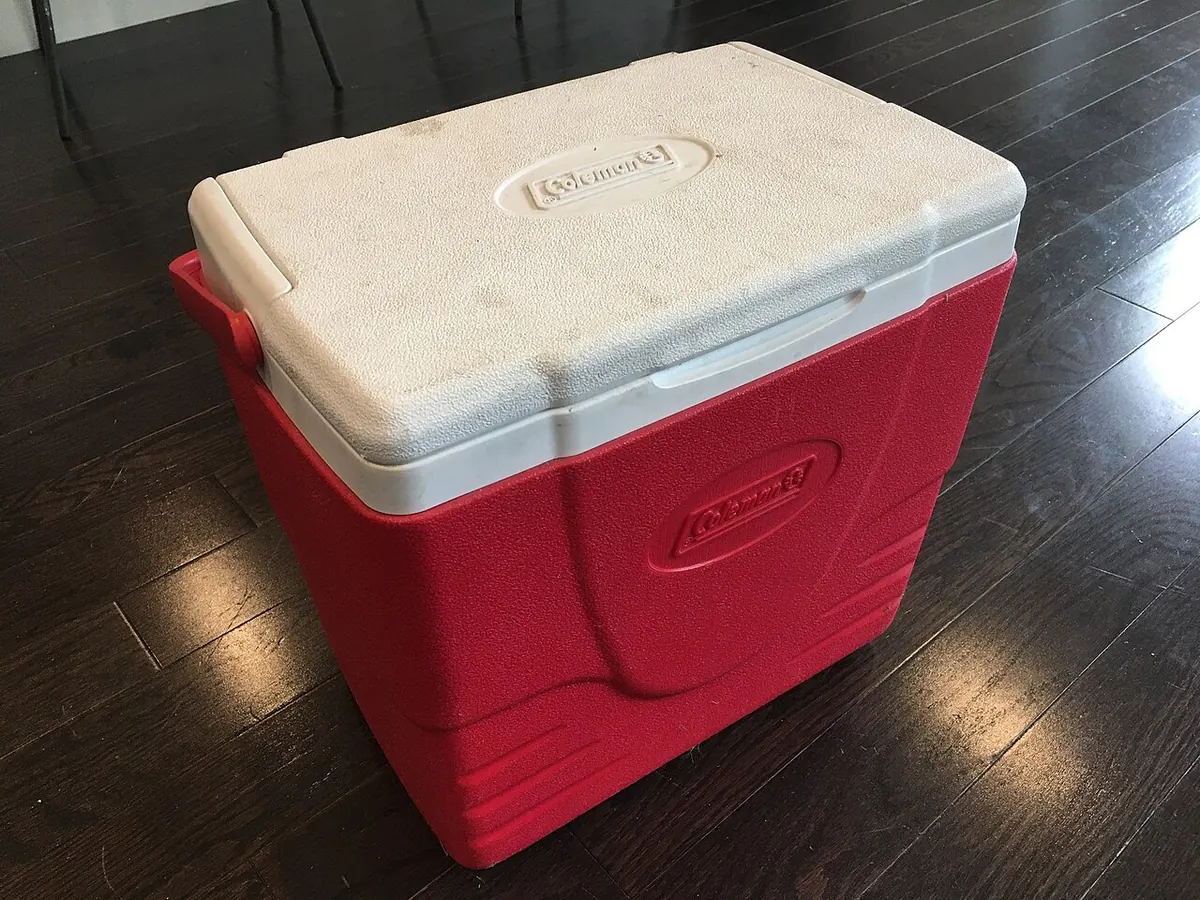 Photo Victor Grigas, CC BY-SA 4.0

Keeping food cold
Coolers, snowbanks and brooks: keeping meat, fish and milk safe with no fridge, and when to throw it out.
What you need
- A good cooler, two if you can: one for food, one for drinks
- Block ice or frozen jugs of water
- Sealed bags or containers for raw meat and fish
- A thermometer for the cooler if you have one
How
- Chill the cooler overnight before you pack it, and pack food that is already cold or frozen.
- Use block ice or frozen water jugs. They last far longer than cubes, and the jugs become drinking water.
- Put raw meat and fish in sealed bags at the bottom, under everything else, so nothing drips onto ready food.
- Pack it full. Empty space melts ice.
- Keep the cooler in the shade, off hot ground, with a sleeping bag or tarp over it.
- Keep the drinks in the second cooler so the food cooler stays shut.
- In spring and fall, a snowbank or a cold brook works. Seal the food in a bag, weight it, and tie it off.
- Aim to keep the food at 4 C or colder.
Do and don't
Do
- Eat the food that spoils fastest first: fish, then ground meat, then the rest.
- Freeze meat flat before a trip so it thaws slowly and keeps the cooler cold.
- Wash your hands after handling raw meat.
Don't
- Do not leave meat, fish, milk or cooked food out of the cold for more than two hours.
- Do not refreeze meat that has thawed and gone warm.
- Do not trust a sniff test. Spoiled food can smell fine.
Watch for
Danger
- Between 4 C and 60 C bacteria grow fast. That is the danger zone.
- Meltwater that has touched raw meat spreads bacteria. Keep meat sealed.
- A cooler left out is a bear's lunch box. Lock it in the truck or hang it. See Keeping animals out of camp.
Notes
When in doubt, throw it out. A ruined supper is better than a night of food poisoning far from help.
Frozen game kept cold in a snowbank has fed people here for generations. The rules are the same: cold, clean and covered.
Updated 2026-09-22
Related
 Berries worth picking
Food and Foraging
The berries worth filling a bucket with, and the rule that keeps you safe.
 Bottled moose
Food and Foraging
Putting up moose in glass jars the safe way, with a pressure canner, so it keeps on the shelf all year.
 Jerky and dried meat
Food and Foraging
Lean moose, caribou or beef cut thin, heated safe, and dried into light food that rides in a pack.
 Mussels and seaweed
Food and Foraging
What the shore gives you on this island, and the one thing that decides whether you eat it.