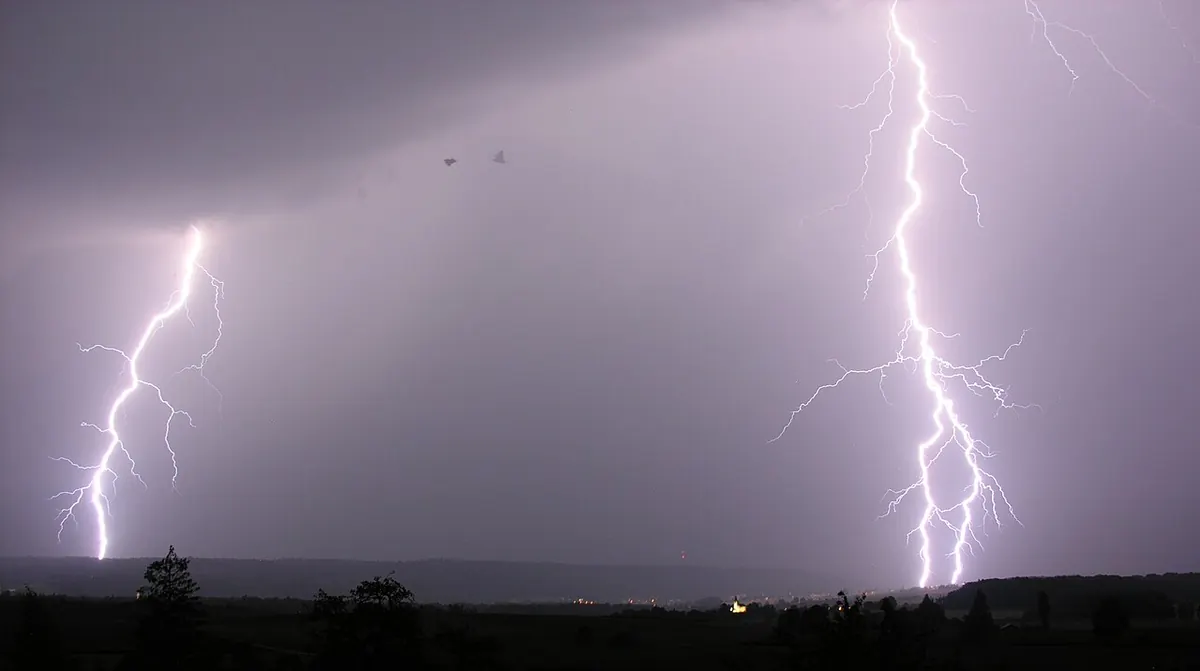
 Photo Hansueli Krapf, CC BY-SA 3.0

Lightning and storms
Seeing a thunderstorm coming, where to be when it hits, and when it is safe again.
Seeing it coming
- Tall towering clouds building through a hot afternoon
- A dark flat base and an anvil top spreading out
- A sudden cool wind blowing toward you out of the storm
- Static on an AM radio
- Thunder of any kind
How
- Count the seconds from flash to thunder. If you can hear thunder at all, you are close enough to be struck.
- Get off open water, ridges, hilltops and open barrens before the storm arrives.
- The safe places are a building or a hard topped vehicle with the windows up. A tent is not shelter.
- Caught outside, go to a low spot or a stand of lower trees, well away from any lone tall tree, open water and wire fences.
- Spread a group out several metres apart so one strike cannot hit everyone.
- Wait 30 minutes after the last thunder before you go back out.
Do and don't
Do
- Head for shore at the first thunder, not the first flash overhead.
- Put down fishing rods, poles and paddles and move away from them.
Don't
- Do not stand under a lone tree.
- Do not stay in a canoe or on a dock.
- Do not huddle together in a group.
Watch for
Danger
- A person struck by lightning carries no charge and is safe to touch. If they are not breathing, start CPR and call 911.
- The wind ahead of a storm line can flatten a tent, drop dead trees and roll a canoe. Look up before you pitch a camp.
- Lightning can strike well ahead of the rain. Blue sky overhead does not mean you are clear.
Notes
When thunder roars, go indoors, and stay there for half an hour after the last rumble. That is the whole rule.
Updated 2026-09-20
Related
 Hurricanes and fall storms
Weather and Sky
The storms that come up the coast from the south in late summer and fall, what they do when they get here, and how to be off the water and ready before they land.
 Fog and coastal wind
Weather and Sky
Why the fog comes in over the headland, what the wind does around it, and how to move in both.
 Freezing rain and ice
Weather and Sky
Rain that freezes the moment it lands. It glazes the ground, bends the trees and brings down the power.
 Reading a forecast
Weather and Sky
Where to get the real forecast, what watches and warnings mean, and how to read wind and rain numbers before you go.