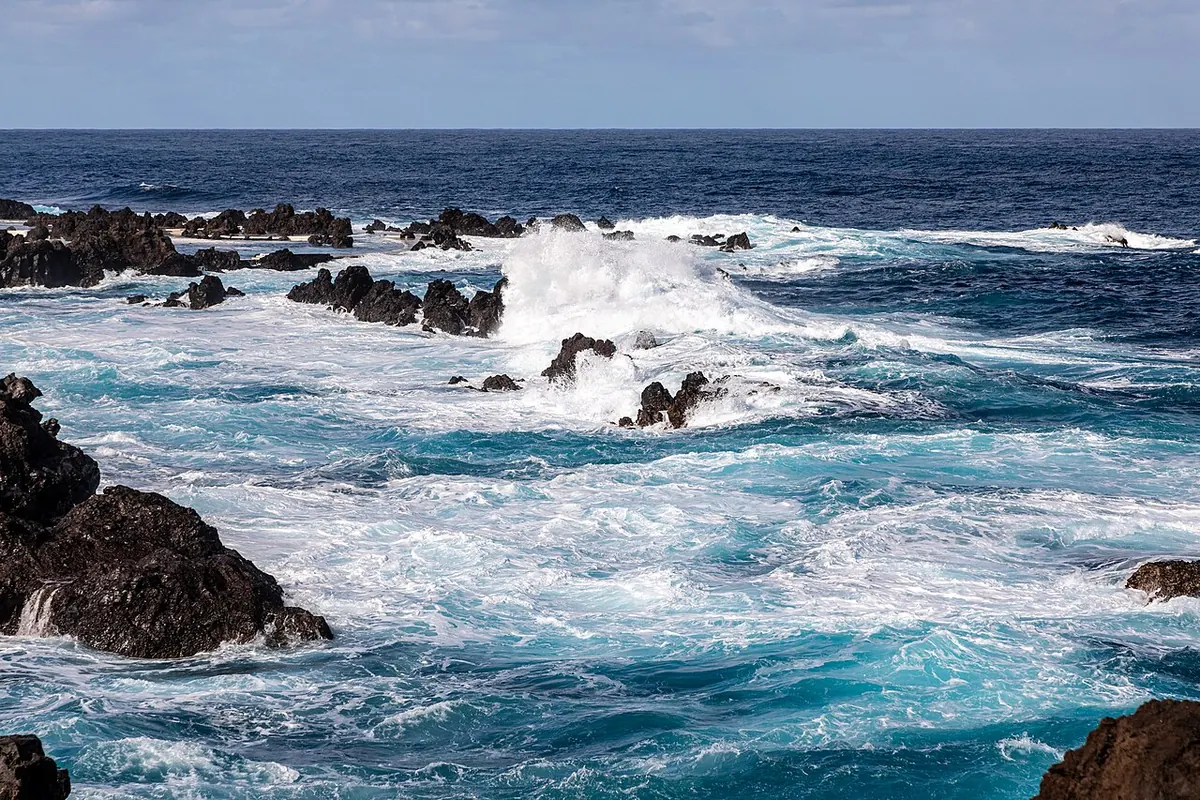
 Photo Dietmar Rabich, CC BY-SA 4.0

Hurricanes and fall storms
The storms that come up the coast from the south in late summer and fall, what they do when they get here, and how to be off the water and ready before they land.
Seeing it coming
- Hurricane season runs from June to the end of November. Most of the storms that reach us come in September and October.
- By the time they get here most have turned post tropical. That does not mean weaker. They often grow wider, and the wind and rain can still be as bad as a hurricane.
- The Canadian Hurricane Centre issues statements days ahead when a storm may reach Atlantic Canada. Watch for them in Environment Canada forecasts.
- Long, slow swell rolling onto the beach on a calm, sunny day can be the first sign of a storm still far to the south.
How
- Watch the track from five days out. The path shifts, so check morning and evening.
- Cancel or cut short any trip on the water or in the back country that overlaps the storm. Be home a day before it lands.
- At the cabin: haul the boat well up and tie it down, bring in or tie down anything loose, close the shutters, and clear the gutters and ditches.
- Fill water jugs, charge every battery, phone and power bank, and have lights, food and heat for three days without power.
- If you are caught out, get away from the shore and out of the tall trees. Camp in thick, low woods on high ground away from brooks.
- After it passes, wait for the wind to drop before walking in the woods, and watch every step for trees down and roads washed out.
Do and don't
Do
- Know where the roads to your cabin cross brooks and culverts. Those are the places that wash out first.
- Check on neighbours after the storm, most of all the ones on their own.
Don't
- Do not go down to the shore to watch the waves. People are swept off the rocks every storm.
- Do not drive through water over a road. You cannot see if the road is still under it.
- Do not run a generator or a stove inside when the power is out. See Propane and carbon monoxide.
Watch for
Danger
- Storm surge: the sea rises well above the high tide line and big waves ride on top of it. Low ground along the coast floods fast.
- Brooks and rivers rise for a day or more after the rain stops, as the water comes down off the hills.
- Hanging and leaning trees after a storm can fall with no warning. Keep out of blowdown until it has settled, and never camp under one.
- Downed power lines. Keep well back and call the power company.
Notes
Igor in 2010 washed out roads and bridges across the east of the island, and Fiona in 2022 took houses off the southwest coast as a post tropical storm. The label on the storm matters less than the wind, the rain and the surge in the forecast.
See Reading a forecast for where to get the warnings, and Leaving a trip plan for anyone going out before the season ends.
Updated 2026-09-26
Related
 Lightning and storms
Weather and Sky
Seeing a thunderstorm coming, where to be when it hits, and when it is safe again.
 Fog and coastal wind
Weather and Sky
Why the fog comes in over the headland, what the wind does around it, and how to move in both.
 Freezing rain and ice
Weather and Sky
Rain that freezes the moment it lands. It glazes the ground, bends the trees and brings down the power.
 Reading a forecast
Weather and Sky
Where to get the real forecast, what watches and warnings mean, and how to read wind and rain numbers before you go.