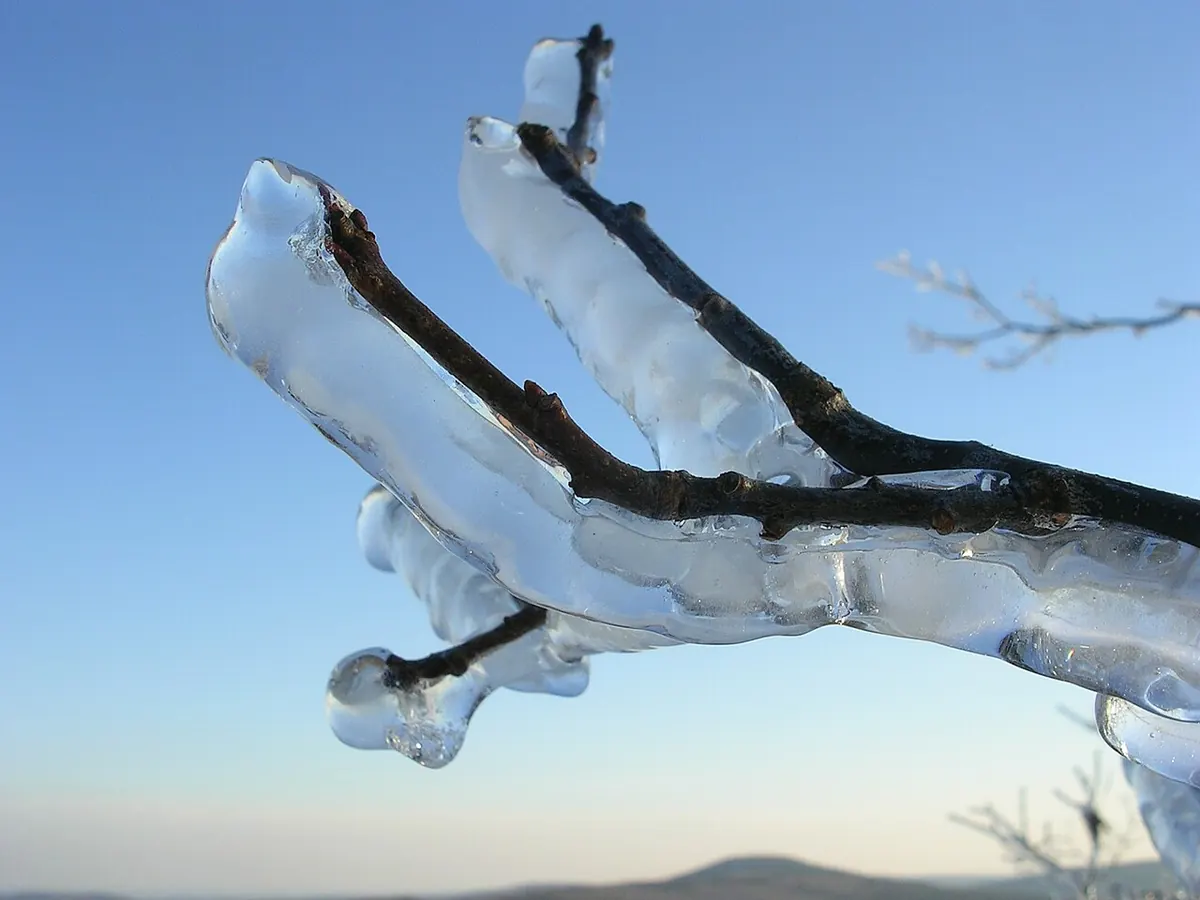
 Photo J. Carmichael, Public domain

Freezing rain and ice
Rain that freezes the moment it lands. It glazes the ground, bends the trees and brings down the power.
What you need
- Ice cleats or creepers for your boots
- A walking stick or poles
- Sand or wood ash for steps and paths
- Heat, light and water that do not need the power. See Cabin power.
- A charged phone and a radio for the forecast
How
- Watch the forecast for freezing rain and freezing drizzle warnings. See Reading a forecast.
- Get firewood, water and fuel in before it starts.
- Stay put if you can. Roads, trails and snowmobile routes are at their worst in freezing rain.
- If you must walk, wear cleats, take short flat steps and keep your hands free.
- Stay out from under trees and power lines while the ice builds on them.
- Knock ice off a tarp or a tent as it builds, before the weight tears it.
- After it stops, spread sand or ash on the paths you use.
Do and don't
Do
- Wear rain gear over your warm layers. Freezing rain soaks you, then freezes on you.
- Check the woodpile and the chimney before the storm comes.
- Run a generator outside, well away from doors and windows. See Propane and carbon monoxide.
Don't
- Do not touch or go near a downed power line. Treat every one as live.
- Do not run a stove, a heater or a generator indoors to keep warm.
- Do not drive unless you have to. Black ice on a road looks like wet pavement.
Watch for
Danger
- Branches and whole trees snap under the weight of ice, often in the night or when the wind picks up.
- A downed line can be hidden under ice and snow and still be live. Stay at least ten metres away and call it in.
- Falls on ice break wrists, hips and heads. Go slow, and keep your phone on you, not in a pack.
Notes
St. John's gets more freezing rain than any other major city in Canada. The Avalon and the east coast see the most of it, from late fall into spring.
Freezing drizzle is lighter but just as slick, and it often comes in with fog.
Updated 2026-09-28
Related
 Hurricanes and fall storms
Weather and Sky
The storms that come up the coast from the south in late summer and fall, what they do when they get here, and how to be off the water and ready before they land.
 Lightning and storms
Weather and Sky
Seeing a thunderstorm coming, where to be when it hits, and when it is safe again.
 Fog and coastal wind
Weather and Sky
Why the fog comes in over the headland, what the wind does around it, and how to move in both.
 Ice fishing a pond
Fishing
Trout through the ice: testing it, cutting a hole, and staying warm while you jig.