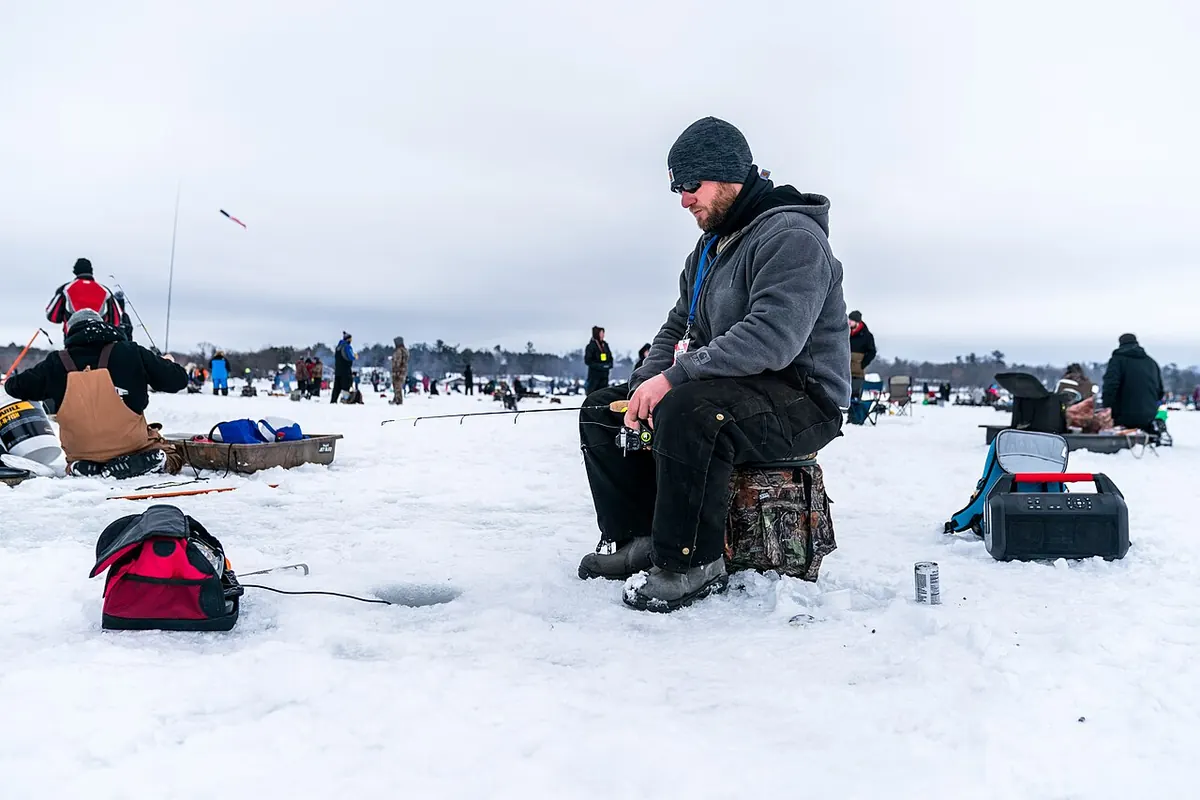
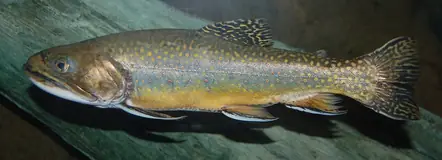
 Photo Lorie Shaull, CC BY-SA 4.0

Ice fishing a pond
Trout through the ice: testing it, cutting a hole, and staying warm while you jig.
What you need
- An auger or an ice chisel
- Ice picks on a cord round your neck
- A spud bar or a stout stick to test ahead of you
- A short jigging rod or a tip up
- Small hooks, small spoons, and worms where bait is allowed
- A scoop to clear slush from the hole
- Something dry to kneel or sit on
- A thermos, spare mitts, and your licence and the current regulations
How
- Test as you go. Cut a hole a few steps out from shore and measure before you walk any farther.
- Clear blue ice at least 15 cm thick holds one person on foot. A group wants 20 cm or more. White or grey ice is about half as strong, so count it as half.
- Spread out on the ice. Never bunch up on one spot.
- Fish the water you would fish in summer: the drop off, off a point, near the inflow but not over it.
- Jig slow and just off the bottom, lift, then hold still. Trout in cold water take softly.
- Skim the new ice off the hole every so often so the line does not freeze in.
- Lay the fish on the snow. It freezes fast and keeps.
Do and don't
Do
- Tell someone which pond and when you will be back.
- Wear the ice picks where your hands can reach them in the water.
- Keep a dry pair of mitts inside your coat.
Don't
- Do not go near inflows, outflows, pressure ridges, or snow that looks wet or dark.
- Do not trust ice after a thaw or rain, even if it was thick last week.
- Do not drive onto a pond you have not measured yourself.
Watch for
Danger
- Moving water under the ice at a brook mouth keeps it thin all winter.
- If you go through, turn back toward the way you came, get your arms up on the ice, kick your legs out flat behind you, and pull out with the picks. Roll away from the hole. Do not stand up until you are well back on thick ice.
- Hands and feet chill fast when you sit still. Get up and move before they go numb.
Notes
Ice fishing is mostly patience and a good thermos. The ice test is the one part you never skip.
The ice figures are the Canadian Red Cross guide for new, clear, hard ice. Old, slushy or snow covered ice is weaker than its thickness says.
Updated 2026-09-20
Related
 Casting a fly
Fishing
The overhead cast and the roll cast, for trout and salmon on a brook, a river or a pond.
 Cleaning your catch
Fishing
Gutting a trout on the bank, keeping it cold, and what the law wants left on the fish.
 Trouting a brook
Fishing
Fishing running water: where trout hold in a brook, walking it upstream, and letting the bait go down with the current.
 Trouting a pond
Fishing
Brook trout on a small pond, what to bring and where they hold.