 Photo Wikimedia Commons, CC BY-SA 3.0

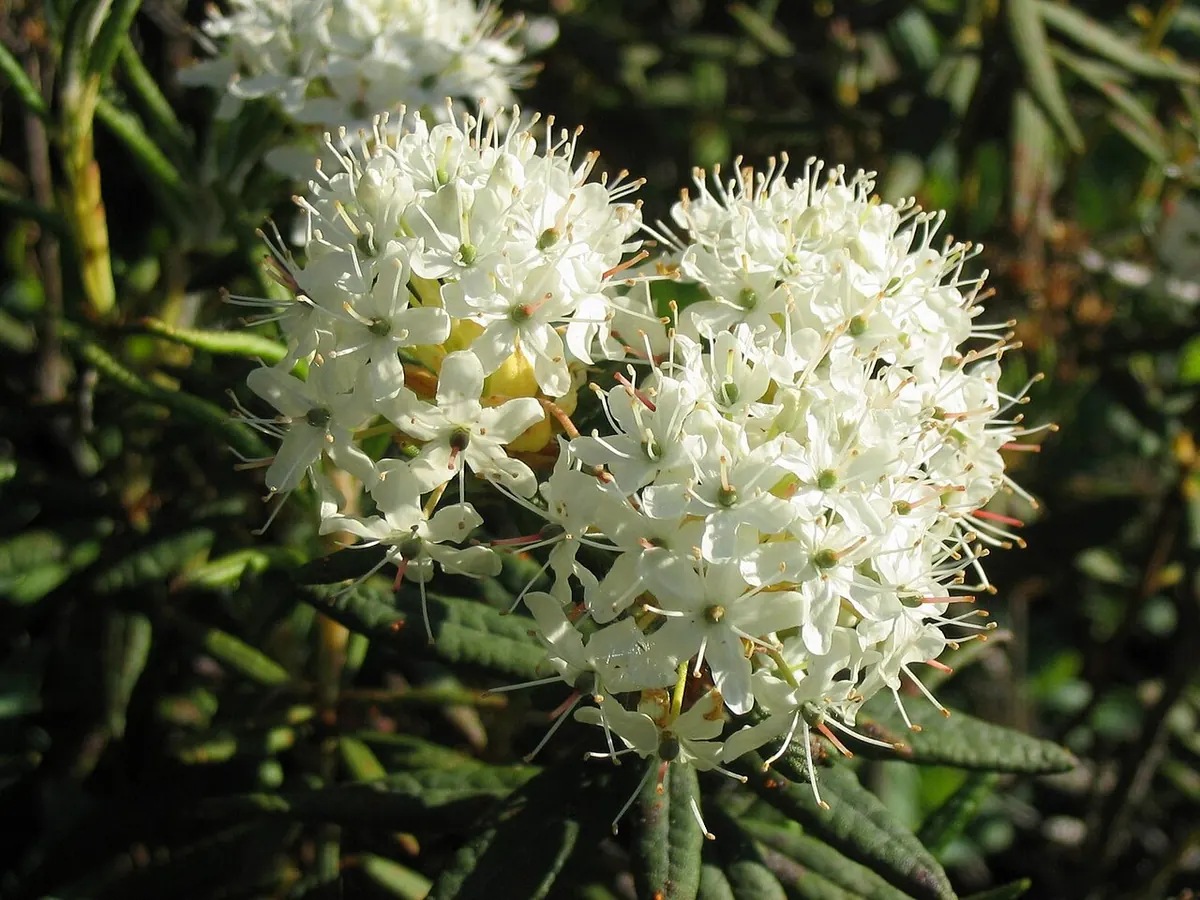
Labrador tea
The low bog shrub with rusty wool under its leaves, how to be sure it is the right one, and how to make a weak, safe cup.
What to look for
- A low evergreen shrub, knee high or less, on bogs, barrens and wet woods
- Narrow, thick, leathery leaves with the edges rolled under
- Thick rusty or orange wool on the underside of the older leaves. Young leaves have white wool that turns rusty.
- Leaves set one at a time along the stem, not in pairs and not in threes
- Round clusters of small white flowers at the tips in early summer
- A spicy, resin smell when you crush a leaf
How
- Turn over every leaf before you pick it and check for the wool. No wool, leave it.
- Pick a few leaves from each plant, not the whole top. The plant grows slowly.
- Use a small handful of leaves for a pot. Less is better.
- Pour hot water over them and let them steep a few minutes. Do not boil the leaves hard or for long. That draws out more of what can make you sick.
- Pour the tea off the leaves and drink a cup, not a pot.
Do and don't
Do
- Learn the plant from someone who knows it, in summer when it is in flower.
- Dry some leaves in a paper bag at home for the winter.
- Keep it to a cup now and then.
Don't
- Do not drink it strong, every day, or by the pot.
- Do not give it to children or drink it if you are pregnant or nursing.
- Do not pick from a plant that has no rusty wool under the leaves.
Watch for
Danger
- Sheep laurel grows right beside it on the same barrens and is poisonous. Sheep laurel leaves come in threes, with no wool underneath and pink flowers. See Plants to leave alone.
- Bog laurel and bog rosemary also grow here, have narrow rolled leaves, and are poisonous. They have a pale or white underside, but no rusty wool.
- Labrador tea itself holds compounds that are harmful in large amounts. Too much can bring on sickness, cramps, dizziness or worse. If someone feels unwell after drinking it, call 811, or 911 if it is bad.
Notes
It has been steeped on the barrens here for a long time. It is a comfort in a cold camp, not a meal and not a medicine.
The rusty wool is the whole test. If you remember nothing else, remember to turn the leaf over.
Updated 2026-09-26
Related
 Plants to leave alone
Plants and Trees
The poisonous plants that grow where we walk, and the one rule that keeps you safe.
 Rose hips
Plants and Trees
The red fruit of wild roses: where to find them, when to pick, and getting the hairy seeds out.
 Bark, moss and spruce gum
Plants and Trees
What the woods hand you for free: tinder, bedding, cordage, patching and a bit of rough medicine.
 Cattails
Plants and Trees
The tall marsh plant with the brown seed head. Something to eat in every season, and fluff that catches a spark.