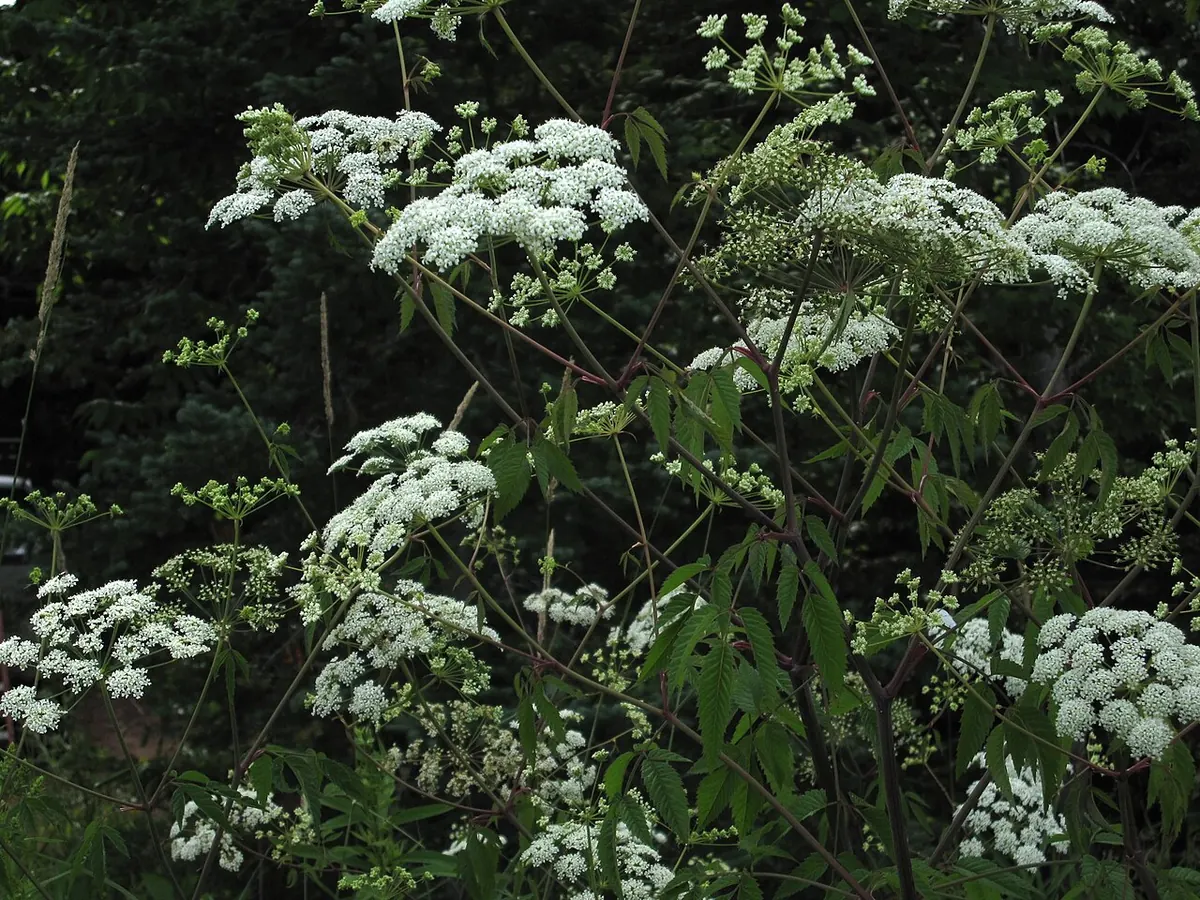
 Photo Williammehlhorn at English Wikipedia, Public domain

Plants to leave alone
The poisonous plants that grow where we walk, and the one rule that keeps you safe.
Water hemlock
Wet ground: ditches, bogs, brook and pond edges. Grows to waist height with flat umbrellas of small white flowers and leaves split into narrow toothed leaflets. The base of the stem is swollen and hollow in chambers, with a yellow oily juice. One of the most poisonous plants in North America. A small bite of the root can kill.
Baneberry
Shady woods. A cluster of shiny red or white berries on a stalk above the leaves, each berry with a dark dot. Every part of the plant is poisonous.
Sheep laurel
The low shrub on the barrens and bogs, known here as goowiddy, with pink cup shaped flowers in early summer and leaves in threes. Poisonous to people and to animals. Bog laurel, with opposite leaves, is poisonous too.
The rule
- If you cannot name it for certain, do not eat it.
- Learn the few good plants well, from someone who knows them, and leave the rest.
- Labrador tea has rusty wool on the underside of its leaves and rolled edges. Laurel does not. Check every leaf before you steep a cup.
Do and don't
- Wash your hands after handling a plant you do not know.
- Teach children never to eat a berry without asking.
- Do not eat a wild mushroom unless someone who knows has shown you that exact kind.
- Do not use a hollow stem of the carrot and parsley family as a straw or a whistle.
Watch for
- If someone eats a plant and gets sick, call 911, or the poison line on the Emergency card. Keep a piece of the plant to show them.
- Water hemlock poisoning brings seizures within an hour. That is a 911 call, not a wait and see.
Notes
The barrens and bog edges hold good berries and a few plants that can kill. Knowing the bad ones by sight is worth more than knowing a dozen good ones.
Updated 2026-09-20
Related
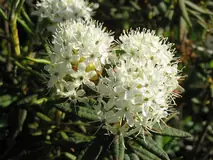 Labrador tea
Plants and Trees
The low bog shrub with rusty wool under its leaves, how to be sure it is the right one, and how to make a weak, safe cup.
 Bark, moss and spruce gum
Plants and Trees
What the woods hand you for free: tinder, bedding, cordage, patching and a bit of rough medicine.
 Cattails
Plants and Trees
The tall marsh plant with the brown seed head. Something to eat in every season, and fluff that catches a spark.
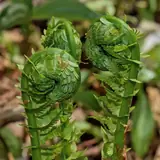 Fiddleheads
Plants and Trees
The spring shoots of the ostrich fern: how to know them, how to pick them, and the cooking that keeps you from getting sick.