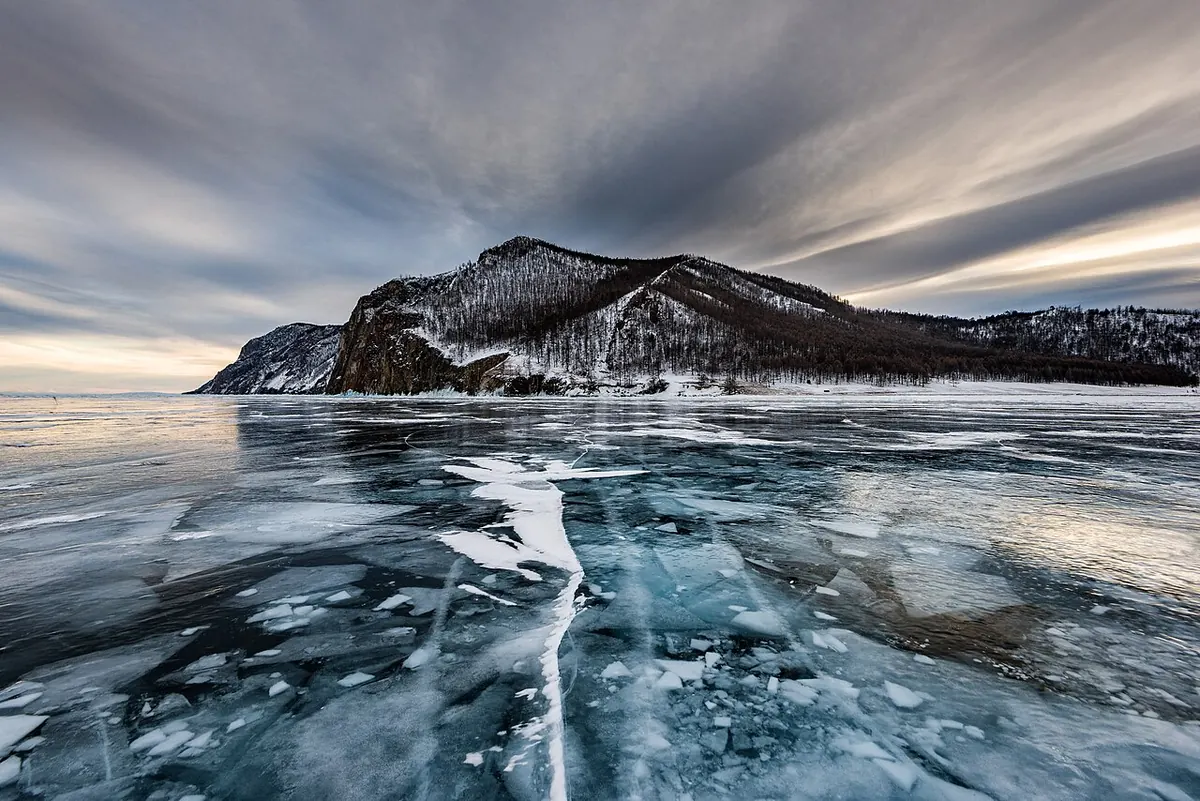
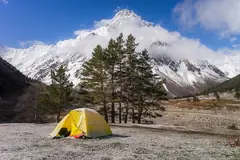
 Photo Sergey Pesterev, CC BY-SA 4.0

Travelling on snow and ice
Reading ice, breaking trail, and what to do when you go through.
What you need
- Snowshoes or skis
- A pole or a stick to sound the ice
- Ice picks on a cord around your neck
- A dry base layer and a hat in a dry bag
- A fire kit you can light with cold hands
How
- Sound the ice ahead of you with the pole, every few steps, close to shore and anywhere moving water runs under it.
- Cross one at a time and spread out. Loosen the pack straps and undo the waist belt so the pack comes off in the water.
- Break trail in short turns and let the man behind take over before you sweat through.
- If you go in, kick your legs flat behind you, get your elbows on the good ice, and haul yourself out the way you came in. Roll clear, do not stand.
- Get a fire and dry clothes on the go the second you are out. Wet and cold kills faster than the water did.
Watch for
Danger
- Ice over a brook, a narrow, or a spring is thin no matter what the pond says.
- Snow on ice is a blanket. It keeps the ice warm and weak.
- Slush over ice soaks boots and freezes them solid.
- Dark blue and clear is strong. Grey, milky or honeycombed is rotten.
Notes
Nobody can tell you a safe thickness from the shore. If you did not drill it or sound it yourself, treat it as unknown.
Updated 2026-09-05
Related
 Snowmobile travel
Winter and Cold
Getting in and out of the country on a machine in winter, and what to carry when it quits miles from the truck.
 Hauling a toboggan
Winter and Cold
Pulling your gear on a sled instead of carrying it: how to load it, rig it and keep it from running you down on the hills.
 Snowshoes and breaking trail
Winter and Cold
Picking a pair, strapping in, and moving through deep snow without wearing yourself out.
 Keeping gear working in the cold
Winter and Cold
Batteries, fuel, water and zippers all quit before you do.