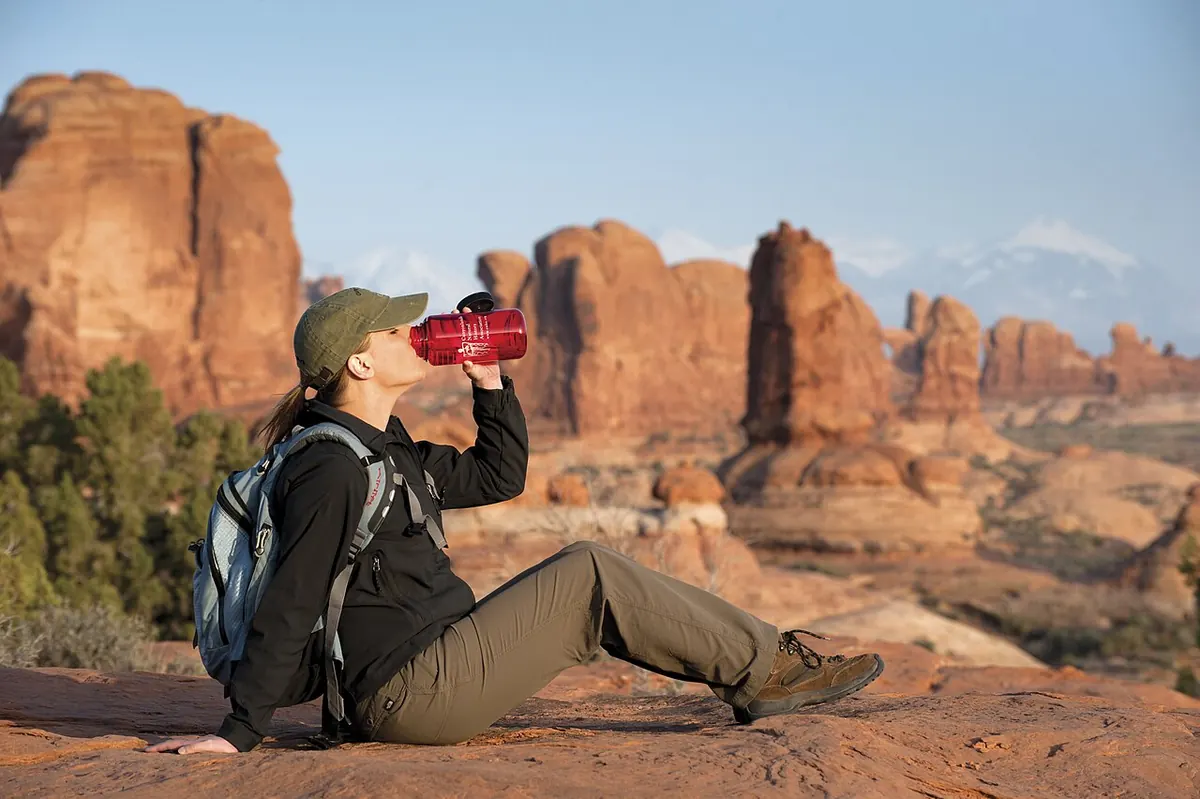
 Photo Arches National Park, Public domain

Staying hydrated
How much to drink, how to tell you are running low, and why cold weather dries you out as fast as a hot day.
What you need
- A water bottle you can reach without taking off the pack
- A way to make more safe water. See Making water safe.
- Salty snacks
- An insulated bottle or a thermos in winter
How
- Start the day with a full bottle and a drink before you walk.
- Drink a little often, every stop, rather than a lot at once.
- At rest you need about two to three litres a day. Hard work, heat and cold all need more.
- Check your urine. Pale yellow is good. Dark yellow, or hardly any, means drink more.
- Eat salty food along with the water on a long hard day, so your body keeps what you drink.
- In the cold, drink warm drinks. You feel less thirsty, but the dry air and hard breathing take water out of you.
- Refill at every good source, before you are empty.
Do and don't
Do
- Keep the bottle inside your jacket or upside down in the pack in winter so the lid does not freeze.
- Drink before you feel thirsty. Thirst lags behind.
- Watch the people with you. Someone going quiet and slow may be short of water.
Don't
- Do not eat snow to stay hydrated. Melt it first. See Water in winter.
- Do not count on alcohol or lots of coffee as water.
- Do not ration water you have while you are still near more. Drink it and refill.
Watch for
Danger
- Headache, dizziness, dark urine and bad tiredness are early signs of dehydration. Stop, drink and rest.
- Confusion, a fast heart and no urine for many hours are serious. Get help.
- Drinking huge amounts of plain water with no food or salt over many hours can also make you sick. Eat as you drink.
Notes
Many cases of hypothermia and bad decisions start with being short of water and food. Keep both going in and you think clearer. See Hypothermia.
A drop of juice crystals in the bottle makes treated water taste better, and people drink more of it.
Updated 2026-09-22
Related
 Water in winter
Water
Getting drinking water when everything is frozen.
 Carrying and storing water
Water
How much to carry, what to carry it in, and how to keep a supply at camp or the cabin clean.
 Catching rainwater
Water
Turning a tarp, a roof or a tree into a water source when it rains, and keeping what you catch clean.
 Finding water
Water
Where the water is when there is none in front of you.