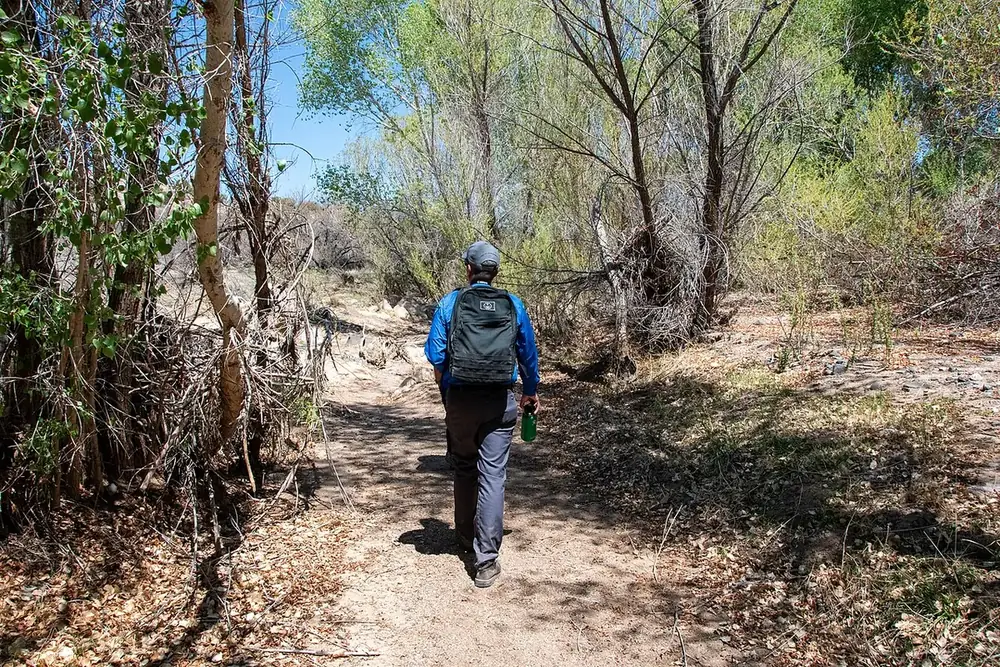
 Photo BLMArizona, Public domain

Carrying and storing water
How much to carry, what to carry it in, and how to keep a supply at camp or the cabin clean.
What you need
- Two hard bottles, one litre each, wide mouth
- A soft bladder or collapsible jug for camp
- A marker or tape to tell raw water from treated
- Clean food grade jugs with caps for the cabin
- An insulated sleeve or a spare wool sock for winter
How
- Plan on about three to four litres a day moving on a mild day, more in heat or hard work. Cold weather dries you out just as fast; you only notice it less.
- Know where the next water is before you leave the last. On the map, a brook you can see is water; a dashed blue line may be dry.
- Keep raw and treated water apart. Mark one bottle or one jug RAW and never drink from it.
- Fill the raw container, treat into the clean one, and keep dirty hands and the raw mouth away from the clean threads.
- At camp, hang or shade the jug. Sun warms water and warm water grows things.
- At the cabin, store in clean food grade jugs, dated, in a cool dark place. Change it every six months.
- In winter, carry bottles upside down in an insulated sleeve. Ice forms at the top first, so the cap end stays clear.
- At night in winter, put a bottle of warm water in the sleeping bag. It keeps you warm and it will not freeze.
Do and don't
Do
- Drink before you are thirsty. Pale urine is the check.
- Keep enough at the cabin for emergencies: at least two litres a person a day for drinking, more for cooking and washing.
- Wash storage jugs with a little household bleach and rinse well before refilling.
Don't
- Do not reuse jugs that held milk, juice or chemicals for storage. Milk jugs break down and never come fully clean.
- Do not let the raw bottle drip onto the clean one while you pour.
- Do not ration water you already have when you are thirsty. Drink it and find more.
Watch for
Danger
- A bladder hose freezes solid in minutes below zero. Blow the water back into the bag after every sip or carry bottles.
- Dark urine, headache and cramps mean you are already behind. Stop, drink and rest.
- Stored water that smells or has anything growing in it gets dumped, not treated.
Notes
Water is heavy: a litre is a kilo. The trick is not to carry all of it, but to know where the next fill is and to arrive with a little left.
On a winter trip, the stove is the water source. Budget fuel for melting snow before anything else.
Updated 2026-09-21
Related
 Catching rainwater
Water
Turning a tarp, a roof or a tree into a water source when it rains, and keeping what you catch clean.
 Closing and opening the cabin
Off Grid
Shutting the cabin down for the winter so nothing freezes, rots or moves in, and opening it again in the spring without a nasty surprise.
 Finding water
Water
Where the water is when there is none in front of you.
 Making water safe
Water
Boiling, filtering and treating water so it does not put you down.