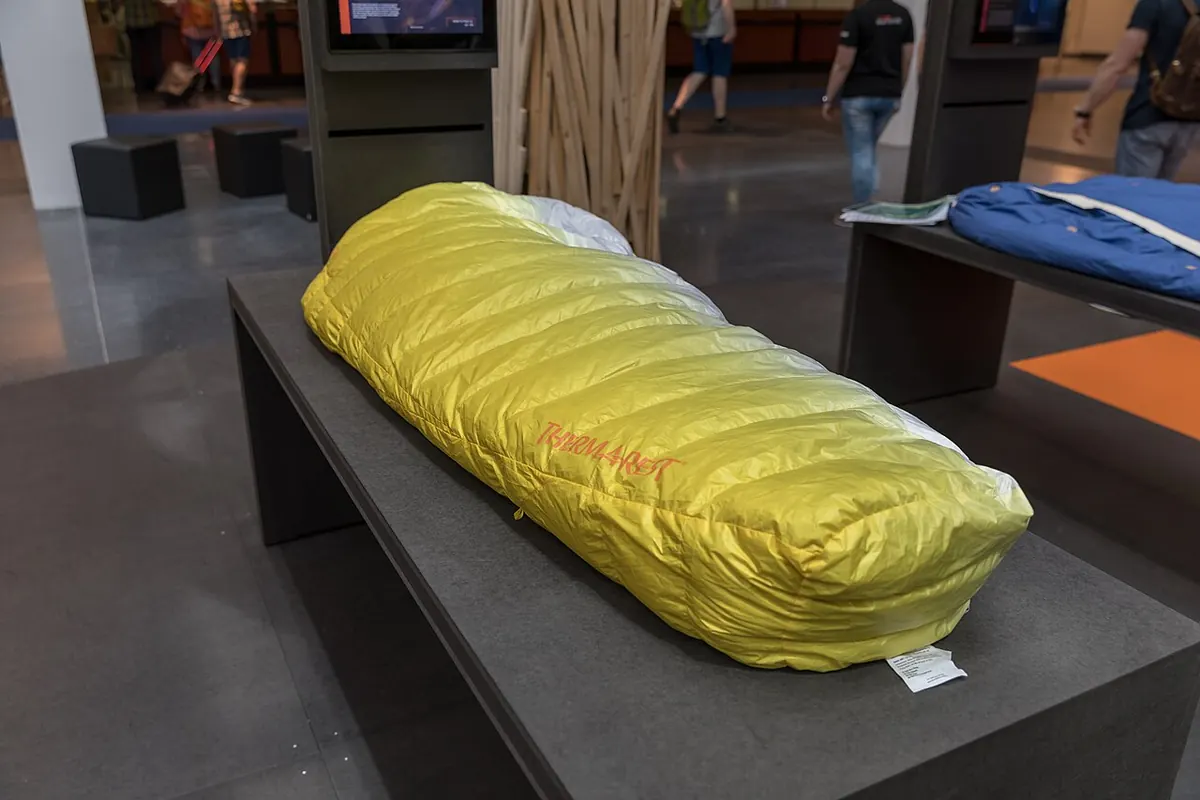
 Photo Matti Blume, CC BY-SA 4.0

Sleeping bags and pads
What keeps you warm at night is the pad under you as much as the bag over you.
What you need
- A bag rated colder than the night you expect, by about 5 C
- A pad with an R value that suits the season: 2 in summer, 4 for the shoulder seasons, 5 or more on snow
- A dry bag or a liner bag to keep the sleeping bag dry
- A thin liner, silk or fleece, worth a few degrees and easier to wash than the bag
- Dry socks and a hat kept only for sleeping
- A closed cell foam pad as a backup, because it cannot puncture
How
- Put the pad down first and check what is under it. A root or a stone is a cold spot all night.
- Shake the bag out an hour before you turn in so the loft comes back.
- Change into dry clothes. Damp clothes take your heat all night and put moisture in the bag.
- Eat something before bed. The bag has no heat of its own, it only keeps yours.
- Sleep with the hood cinched on a cold night and breathe outside the bag, not into it.
- Air the bag every morning, inside out on a line or over a bush, even for twenty minutes.
- Store it at home loose in a big cotton sack, never squashed in its stuff sack.
Do and don't
Do
- Stack two pads to add their R values when it turns colder than you planned.
- Put tomorrow's clothes and your boot liners in the bag with you so they are warm and thawed.
- Pee before bed. Holding it costs you heat.
Don't
- Do not lie straight on the ground, in a vehicle bed, or on a cot with nothing under you. The ground and moving air pull heat faster than anything.
- Do not wear everything you own in the bag. Squashing the loft makes it colder, not warmer.
- Do not dry a wet down bag by a fire. Sparks and heat wreck it.
Watch for
Danger
- Down is warmer for the weight and useless when it is wet. In wet coastal weather synthetic is the safer bet unless you can keep down dry for certain.
- A comfort rating and a limit rating are two different numbers. The limit rating is survival, not sleep.
- A punctured air pad in winter is an emergency. Carry the patch kit and a foam backup.
Notes
Most cold nights are a pad problem, not a bag problem. People buy a warmer bag and lie on the same thin pad and wonder why they still shiver.
R values add up. A foam pad under an air pad gets you through most of a Newfoundland winter without buying anything expensive.
Updated 2026-09-20
Related
 Boots and rain gear
Gear and Packs
The two pieces that decide whether a wet day is a nuisance or a rescue.
 Choosing a tent
Gear and Packs
What makes a tent stand up to our wind and rain, and how to pick the right size, weight and kind for the trips you actually take.
 Hammock camping
Gear and Packs
Sleeping off the ground: hanging a hammock level and safe, and keeping warm and dry in it.
 Packing a backpack
Gear and Packs
Where everything goes so the pack rides on your hips, stays dry, and gives you what you need without unpacking it all.