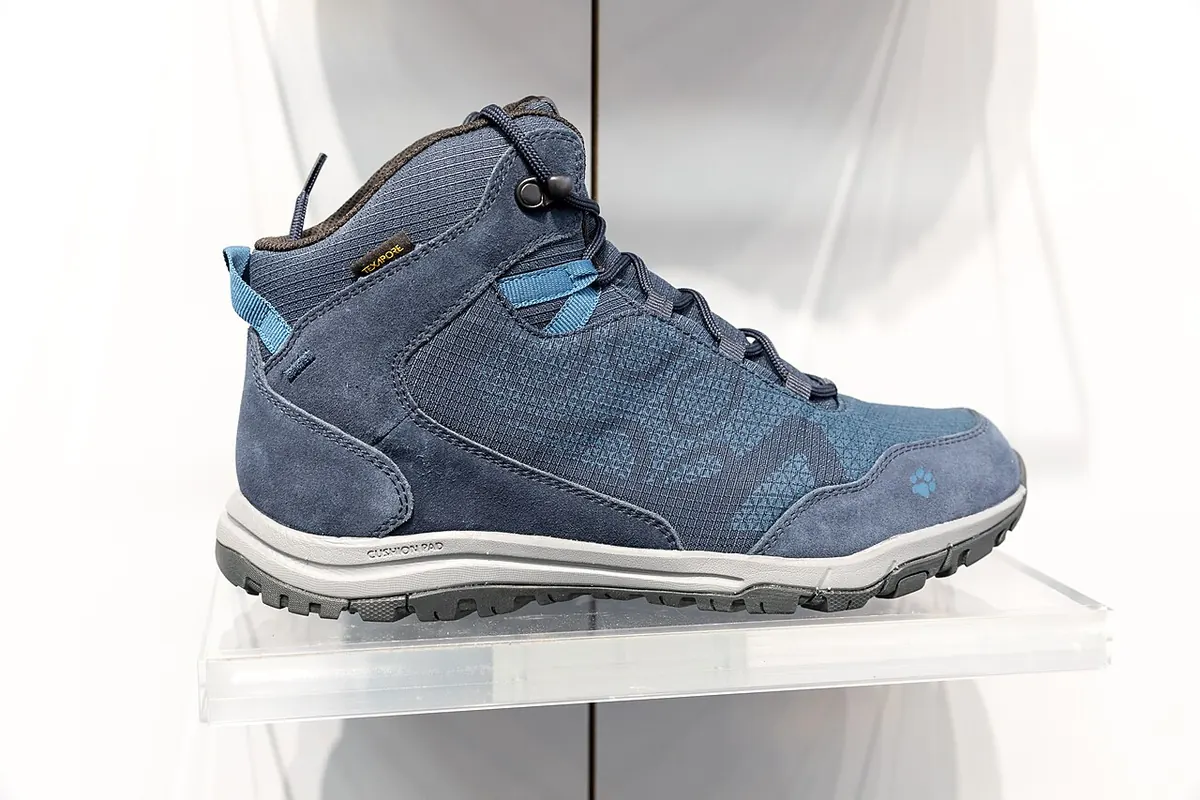
 Photo Matti Blume, CC BY-SA 4.0

Boots and rain gear
The two pieces that decide whether a wet day is a nuisance or a rescue.
What you need
- Boots that fit with the sock you actually wear, broken in before the trip
- Wool or synthetic socks, and a dry spare pair in a bag
- A hooded rain jacket with taped seams and pit zips
- Rain pants that go on over boots, with side zips if you can get them
- Gaiters for bog, snow and alders
- A pack liner or dry bags, because a pack cover fails in real rain
How
- Fit boots at the end of the day when your feet are their biggest, with the sock you will wear.
- Walk them in at home for a week before they see a trail.
- Lace loose over the top of the foot going uphill and tight round the ankle going down.
- Layer for rain the same way as for cold: wick, warm, wind and water. The shell goes on before you are wet, not after.
- Vent early. Sweat under a shell soaks you as surely as the rain does.
- Dry boots slowly, away from direct heat. Newspaper or dry moss inside overnight pulls the water out.
- Reproof the shell when water stops beading. Wash it first, then treat it. Dirt is what kills the beading.
Do and don't
Do
- Keep one pair of socks that never leaves the dry bag, for sleeping only.
- Treat leather boots before the season, and again mid season.
- Carry a spare set of laces. A snapped lace ends a walk.
Don't
- Do not wear cotton anything on a wet day. Cotton holds water and steals heat.
- Do not put new boots on for a long trip.
- Do not dry boots by the fire. Heat wrecks the glue and cracks the leather.
Watch for
Danger
- Wet feet all day means blisters and trench foot. Stop, dry off, change socks, and deal with a hot spot the minute you feel it.
- Rubber boots keep the bog out and hold the sweat in. Fine for a day on flat ground, hard on a long walk.
- Cold rain and wind is the fastest way into hypothermia in this province, warmer than freezing and far more dangerous.
Notes
Everything else in the pack can be improvised. Boots that fit cannot.
Rain gear is only waterproof while it is clean and looked after. Wash it, reproof it, and it lasts years.
Updated 2026-09-20
Related
 Choosing a tent
Gear and Packs
What makes a tent stand up to our wind and rain, and how to pick the right size, weight and kind for the trips you actually take.
 Hammock camping
Gear and Packs
Sleeping off the ground: hanging a hammock level and safe, and keeping warm and dry in it.
 Packing a backpack
Gear and Packs
Where everything goes so the pack rides on your hips, stays dry, and gives you what you need without unpacking it all.
 Sleeping bags and pads
Gear and Packs
What keeps you warm at night is the pad under you as much as the bag over you.