Wolf Wilds › Animals and Tracks
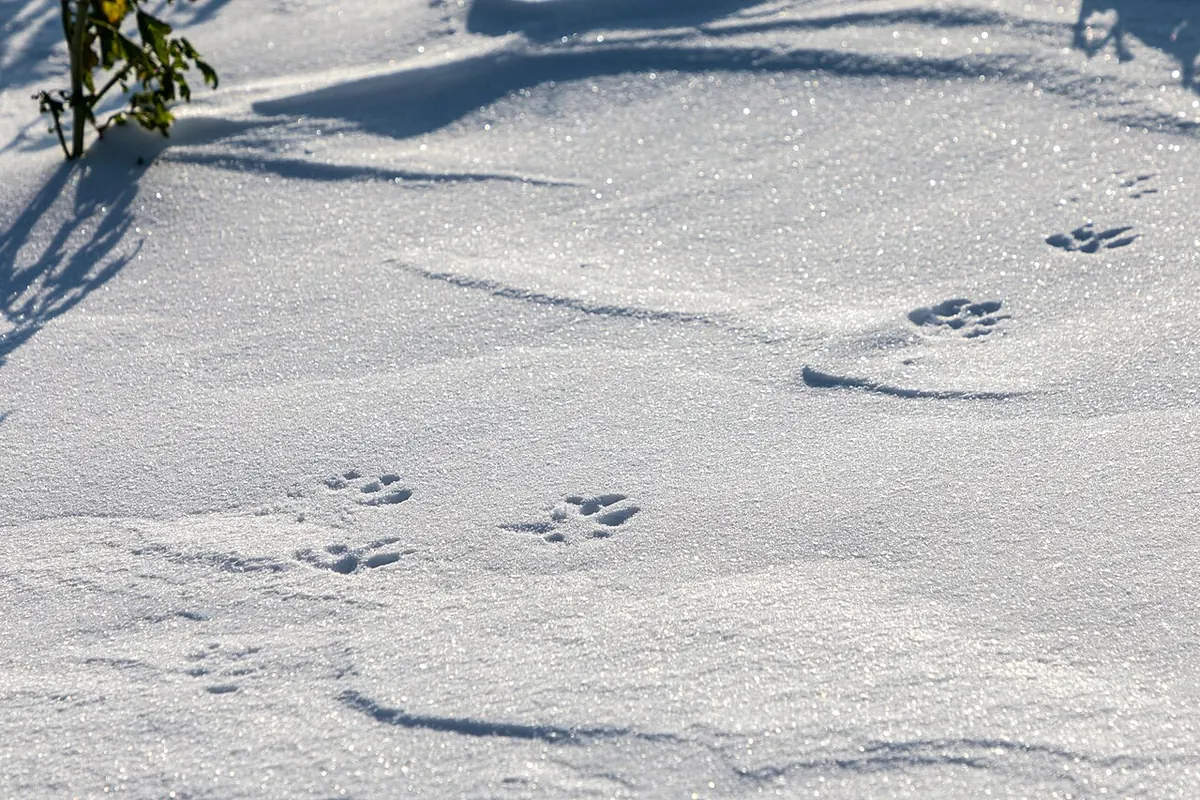 Photo Dietmar Rabich, CC BY-SA 4.0

Reading tracks and sign
Who walked here and when: tracks, droppings, browse and the other marks animals leave.
What counts as sign
- Tracks in snow, mud and sand
- Droppings
- Beds pressed in grass or snow
- Browse: chewed twigs and stripped bark
- Rubs and scratches on trees
- Trails worn into the ground
- Torn stumps and rolled rocks
How
- Look in low light, early or late, with the sun off to one side. Tracks show up in the shadows.
- Measure the print, length and width, and the distance between prints.
- Follow the line for a few steps rather than reading one print. The pattern tells more than the foot.
- Judge age by the edges. Fresh tracks are crisp; old ones soften, crust over or fill with snow and leaves.
- Check the browse. A clean angled cut close to the snow is a hare. A ragged torn tip at chest height or higher is a moose.
Who made it
- Moose: split hoof, heart shaped, about the length of your hand or longer. Dew claws print behind in snow or soft mud.
- Caribou: rounder hoof halves that splay wide, with a crescent shape.
- Black bear: five toes and a wide pad. The hind print looks like a flat bare human foot.
- Red fox: small neat oval prints placed nearly in one straight line.
- Snowshoe hare: the big hind feet land ahead of the small front ones, making a Y shape.
- Lynx: big round prints with no claw marks, large for the size of the cat.
Do and don't
Do
- Carry a small ruler or know the width of your own hand.
- Take a picture with something beside the track for size.
Don't
- Do not follow fresh bear sign into thick cover.
- Do not handle droppings with bare hands.
Watch for
Danger
- Fresh bear sign around a carcass, or small tracks beside big ones, means leave the way you came.
- In the fall rut, fresh moose sign with thrashed saplings means a bull is close. Give him room.
Notes
Every patch of snow after a fresh fall is a newspaper of the night before. It only takes a few trips to start reading it.
Updated 2026-09-20
Related
 Keeping animals out of camp
Animals and Tracks
Food, smell and where you put them: the whole of it. Bears, foxes, jays and mice all read the same sign.
 Moose and bear
Animals and Tracks
What to do when you meet the two that matter on this island.
 Beavers and beaver ponds
Animals and Tracks
What beavers do to a stretch of country, and how their dams, ponds and lodges can help you or get in your way.
 Blackflies, mosquitoes and ticks
Animals and Tracks
The small animals that ruin more trips than bears do, and how to keep them off you.