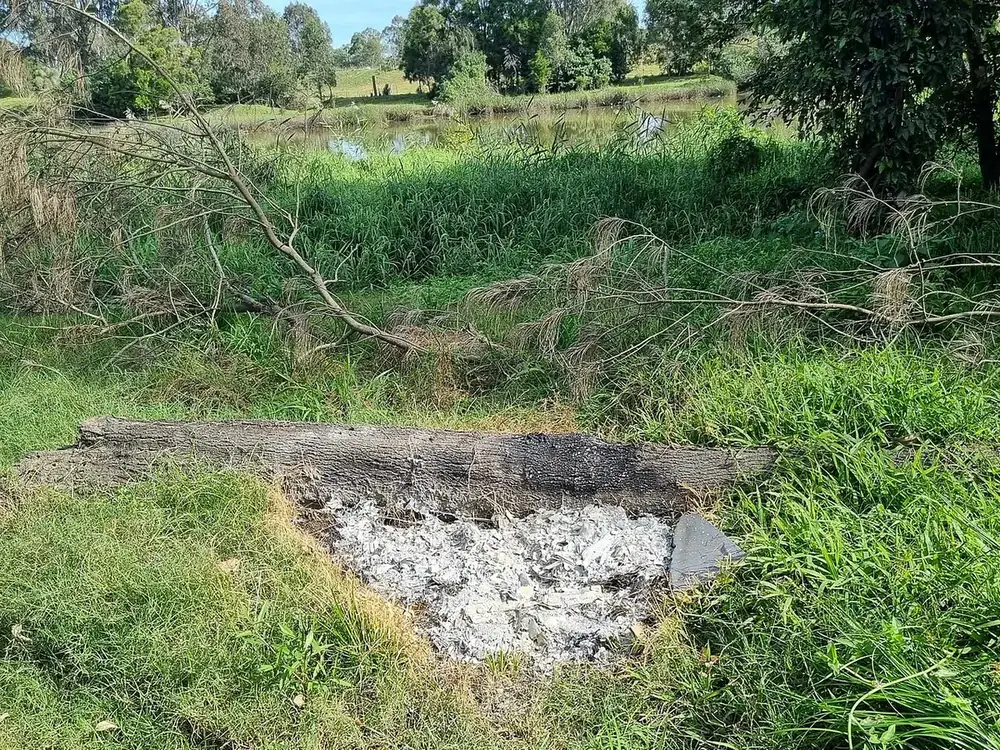
 Photo SCK2002, CC0

Putting a fire out
Drown it, stir it, feel it: making sure a campfire is dead out before you leave, and why the ground here can hold fire for days.
What you need
- A pot or a bucket for water, several loads of it
- A stick or a small shovel to stir
- Time: twenty minutes before you plan to leave
How
- Let the fire burn down to ash before you want to go. Stop adding wood well ahead.
- Spread the coals out thin with a stick.
- Drown it. Pour water over all of it, not just the red parts, until the hissing stops.
- Stir the ashes and wet coals, scrape the half burnt sticks, and turn everything over.
- Drown it again.
- Feel it. Hold the back of your hand close, then touch the ashes. If anything is warm, keep going.
- Check around the edge of the fire and under nearby rocks for roots, moss or peat that have caught.
- Leave only when all of it is cold to the touch.
Do and don't
Do
- Build fires on bare rock, sand, gravel or an existing fire ring, well back from trees and overhanging branches.
- Check the province's fire restrictions and whether you need a permit before you light any fire in fire season.
- Keep the water ready before you light the fire, not after.
Don't
- Do not bury a fire with dirt and walk away. It can smoulder under the soil.
- Do not light a fire in high wind or when the woods are tinder dry.
- Do not leave a fire alone, even for a short walk.
Watch for
Danger
- Peat, moss and the deep duff of our woods can burn underground and come up days later metres away. Never light a fire on it.
- Roots under a fire ring carry fire away from it. Dig around and wet the ground if you are unsure.
- If a fire gets away from you, get yourself clear first, then report it. Call 911.
Notes
If it is too hot to touch, it is too hot to leave. That is the whole rule.
Where there is no water, use sand or mineral soil, stir it in thoroughly, and keep stirring and checking until it is cold. It takes much longer than water.
Updated 2026-09-22
Related
 Fire safety in camp and at the cabin
Fire
Alarms, an extinguisher, two ways out, and what to do in the first minute when a tent, a pot or a cabin catches.
 A fire reflector
Fire
A wall of green logs or a rock face behind the fire, so the heat comes back to you and your shelter instead of into the woods.
 Fire in wet weather
Fire
Getting a fire going when it has rained for three days and everything on the ground is soaked.
 Fire without matches
Fire
Getting a flame when the matches are gone or soaked.