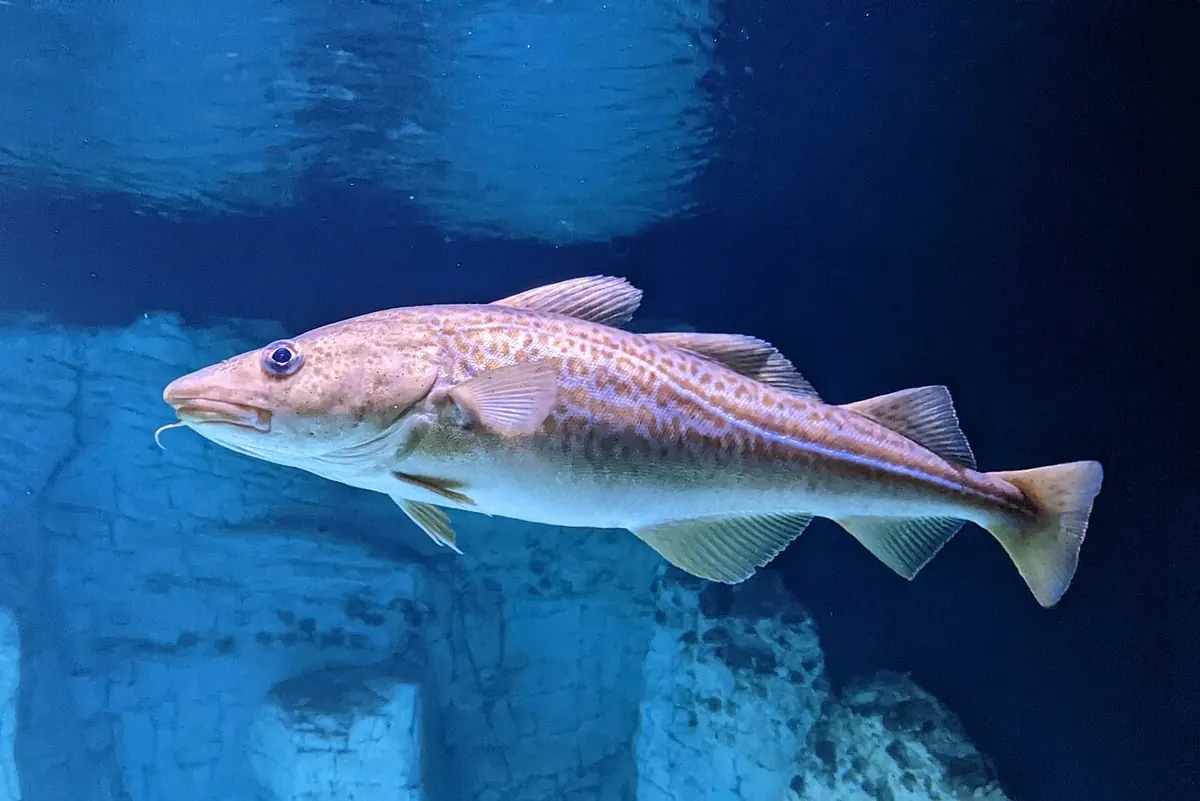
 Photo Wilhelm Thomas Fiege, CC BY-SA 4.0

Jigging for cod
Handlining a cod up off the bottom from a small boat, the old Newfoundland way, in the recreational food fishery.
What you need
- A cod jigger, a heavy lead or chrome lure with a big hook on it
- Stout handline on a wooden reel, or a stiff rod with heavy line
- A sound boat, a lifejacket for everyone aboard, and a way to call for help
- A sharp knife, a bucket, and a tub or cooler with ice
- Gloves, and a gaff or a net for a big fish
- This year's season dates, daily limit and rules
How
- Check the season dates and the daily limit before you leave the wharf. They change every year.
- Head for known grounds, a shoal or a ledge where cod feed. Old hands find them by lining up marks on shore.
- Let the jigger go to the bottom, then take up a fathom or so of line.
- Jig with long, sharp pulls of the arm and let the jigger flutter back down.
- When you feel weight, haul steady, hand over hand, and keep the line tight.
- Bring the fish in over the gunwale with the gaff or net, not by lifting it on the line.
- Bleed and gut the fish right away and put it on ice. See Cleaning your catch.
Do and don't
Do
- Watch the sky and the sea all day. Wind comes up fast on the water.
- Keep count of your fish and stop at your limit.
- Keep the line coiled in a tub so it cannot foul your feet.
Don't
- Do not go out alone, and do not go out without your lifejacket on.
- Do not wrap the handline around your hand. A big fish or a snag can cut you.
- Do not jig while the boat drifts toward rocks or a lee shore.
Watch for
Danger
- Fog can close in with no warning. Carry a compass, a GPS and a horn. See Fog and coastal wind.
- Cold North Atlantic water takes your strength in minutes. Wear the lifejacket. See Capsize and cold water.
- Jigger hooks are big and sharp. Mind the hook while a fish is flapping in the boat.
Notes
The recreational groundfish fishery in Newfoundland and Labrador opens for set weeks in summer and fall, with a daily limit for each person and each boat. Fisheries and Oceans Canada sets the dates and the numbers, and they change from year to year.
Cod feed near the bottom. If nothing bites after a while, move to another spot rather than waiting it out.
Updated 2026-09-28
Related
 Casting a fly
Fishing
The overhead cast and the roll cast, for trout and salmon on a brook, a river or a pond.
 Cleaning your catch
Fishing
Gutting a trout on the bank, keeping it cold, and what the law wants left on the fish.
 Fishing knots
Fishing
Four knots that tie on a hook, a lure or a leader and hold a good trout, and how to tie them so they do not slip.
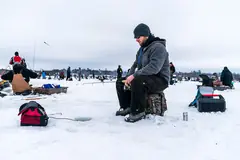 Ice fishing a pond
Fishing
Trout through the ice: testing it, cutting a hole, and staying warm while you jig.