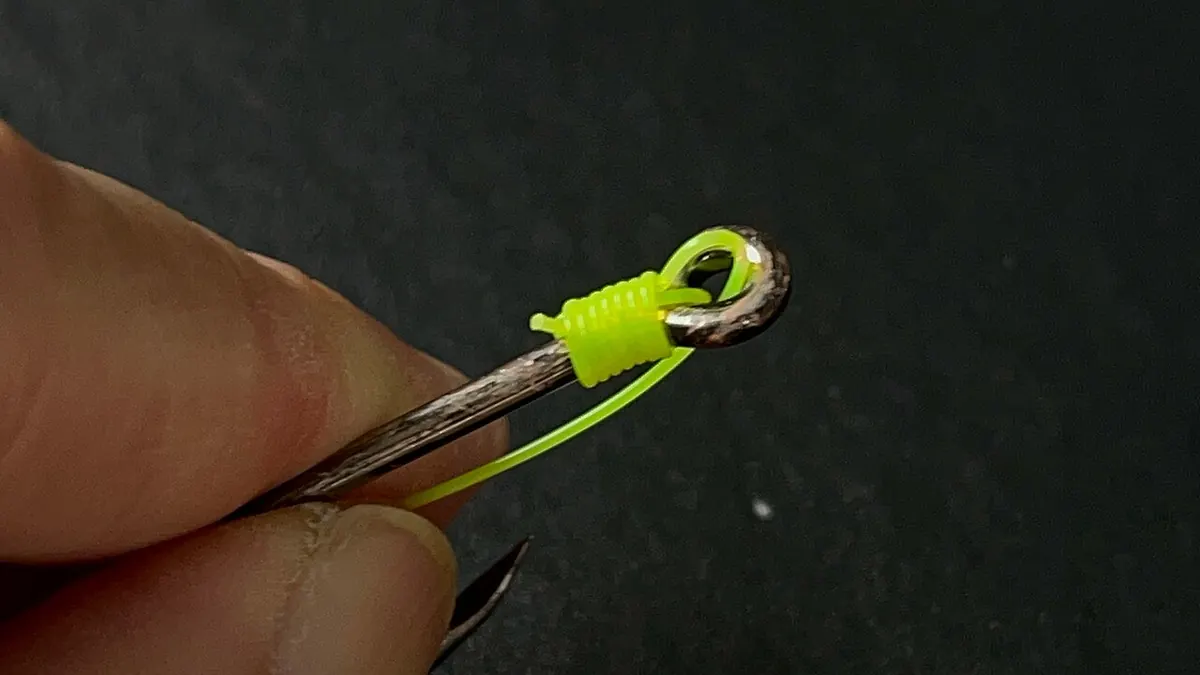
 Photo Fishingknotsfast, CC BY-SA 4.0

Fishing knots
Four knots that tie on a hook, a lure or a leader and hold a good trout, and how to tie them so they do not slip.
What you need
- Your line and a hook, lure or swivel
- Nail clippers or small snips
- A little water or spit to wet the knot
How
- Improved clinch knot: pass the line through the eye, wrap the tag end around the main line five to seven times, bring it back through the small loop at the eye, then through the big loop you just made. Wet it and pull tight.
- Palomar knot: double about 15 centimetres of line, push the loop through the eye, tie a loose overhand knot with it, pass the hook through the loop, wet and pull tight. The strongest simple knot for braid.
- Uni knot: run the line through the eye, lay the tag back along the main line, wrap it around both lines and through the loop five or six times, then cinch it down and slide it to the eye.
- Surgeon's knot to join a leader: lay the two lines side by side, tie an overhand knot with both, pass them through a second time, wet and pull all four ends.
- Trim the tag end close, about three millimetres, with clippers. Never burn it.
Do and don't
Do
- Wet every knot before you pull it tight. Dry line heats and weakens.
- Pull hard on each knot once you tie it. Better it breaks in your hand than on a fish.
- Retie after every fish or snag, or when the line near the knot feels rough.
Don't
- Do not use fewer wraps on thin line. Light line needs more.
- Do not leave tag ends long. They catch weed.
- Do not leave cut line on the shore. Birds and animals get tangled in it.
Watch for
Danger
- Hooks in fingers and faces. Hold the hook by the bend when you tie, and wear glasses when you cast.
- Old line that has sat in the sun goes brittle. Replace it every season.
Notes
If you only learn one, learn the improved clinch. It has tied on more trout flies and spinners than any other knot.
Practice at the kitchen table with a thick cord and a big ring until your fingers know it without looking.
Updated 2026-09-22
Related
 Casting a fly
Fishing
The overhead cast and the roll cast, for trout and salmon on a brook, a river or a pond.
 Cleaning your catch
Fishing
Gutting a trout on the bank, keeping it cold, and what the law wants left on the fish.
 Ice fishing a pond
Fishing
Trout through the ice: testing it, cutting a hole, and staying warm while you jig.
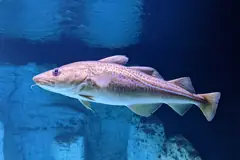 Jigging for cod
Fishing
Handlining a cod up off the bottom from a small boat, the old Newfoundland way, in the recreational food fishery.