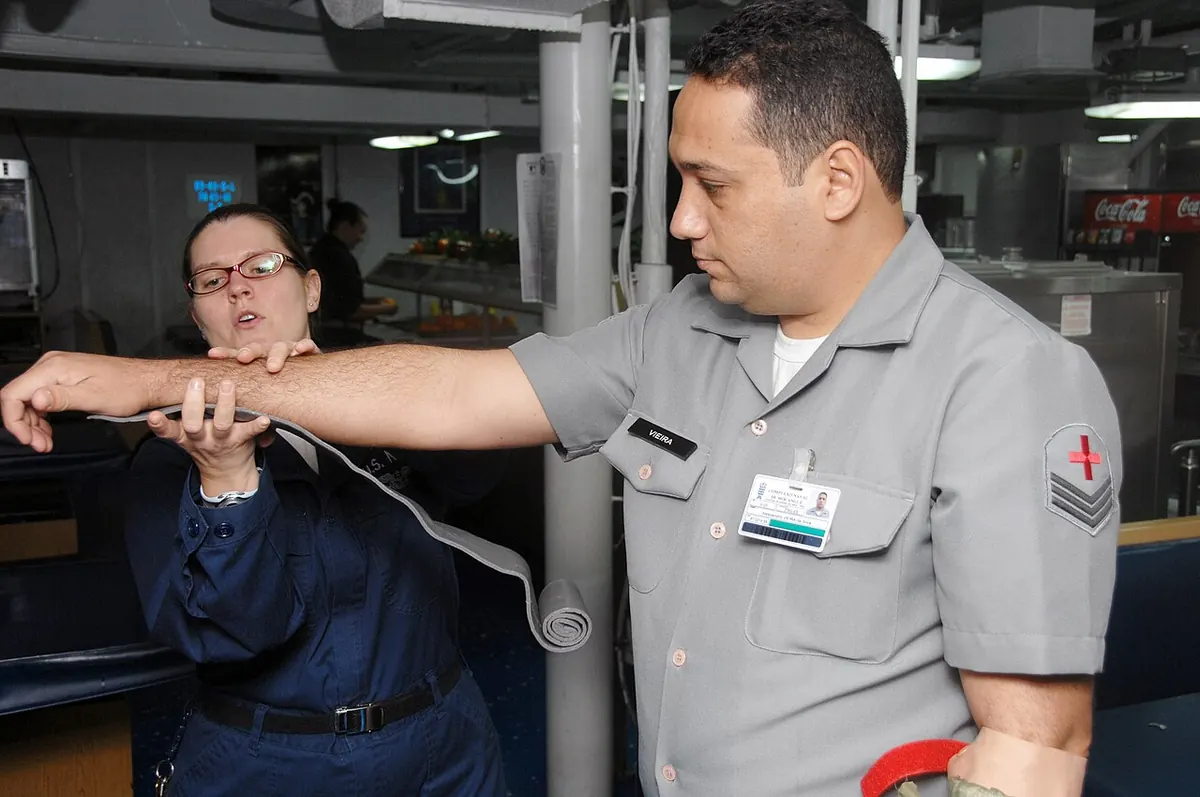
 Photo U.S. Navy photo, Public domain

Splinting a break
Holding a broken bone or a bad sprain still enough to move on it.
What you need
- A pad, a rolled jacket or a sleeping mat
- Straight sticks, a pole or a paddle
- Tape, cord, strips of cloth or a belt
- A triangle bandage, or a sleeve pinned up for a sling
How
- Look at it beside the other side. Deformed, grinding, or bone through the skin, treat it as broken.
- Check the fingers or toes below the injury for warmth, colour and feeling before you tie anything, and check them again after.
- Pad the limb first, then splint it in the position you found it. Do not straighten it unless the hand or foot below has gone cold and blue.
- Splint past the joint above and the joint below so nothing can bend.
- Tie above and below the break, never across it, tight enough to hold and no tighter.
- Sling an arm and strap it against the chest. Splint a leg to the good leg when there is nothing else to work with.
Watch for
Danger
- White, cold or numb fingers and toes after strapping mean the ties are too tight. Loosen them now.
- Swelling comes on fast, so a splint that fit when you tied it will bind within the hour. Check it every twenty minutes.
- A broken hip, thigh or pelvis is a stay put and send for help job. It is not a walk out.
Notes
Snow or cold water in a bag, twenty minutes on and twenty off, takes the swelling down. Keep cloth between it and the skin.
Updated 2026-09-05
Related
 Burns and blisters
First Aid
Cooling a burn properly, covering it, and stopping a blister before it ends the trip.
 Carbon monoxide poisoning
First Aid
The gas you cannot see or smell. How it gets into a tent, a hut, a truck or a boat, the signs, and what to do.
 Cuts and infection
First Aid
Cleaning a knife or axe cut properly in the field, closing and covering it, and knowing the signs that it has gone bad.
 Frostbite
First Aid
Catching frozen skin early, warming it the right way, and the one rule about when not to thaw it.