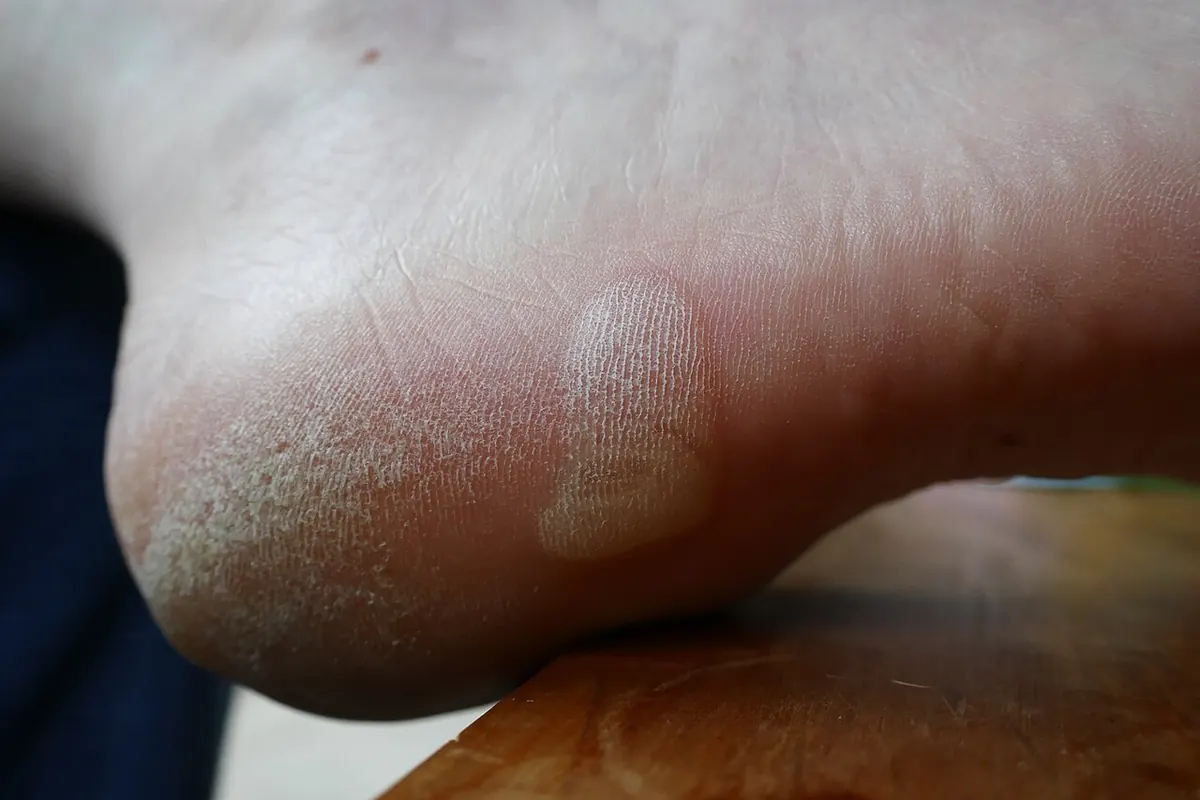
 Photo CauliflowerMoon, CC BY 4.0

Burns and blisters
Cooling a burn properly, covering it, and stopping a blister before it ends the trip.
What you need
- Clean cool water, as much as you can spare
- Non stick dressings and a roll of gauze
- Plastic cling wrap, which makes a good clean burn cover
- Moleskin, blister pads or strong tape
- A small pair of scissors
- Pain relief from your own kit
How: a burn
- Stop the burning. Get the person away from the fire, smother flaming clothing, pull off anything hot that is not stuck to the skin.
- Cool the burn under cool running or poured water for at least ten minutes. Twenty is better. Cool the burn, keep the rest of the person warm.
- Take off rings, watches and tight clothing near the burn before it swells.
- Cover it loosely with a non stick dressing or a layer of cling wrap laid on, not wrapped tight.
- Leave blisters on a burn whole. They are the best dressing there is.
- Give pain relief and fluids, and watch for shock: pale, cold, clammy, fast pulse.
How: a blister
- Stop the moment you feel a hot spot. A hot spot fixed in two minutes saves a week.
- Dry the skin and put tape or moleskin over the hot spot, smooth, with no wrinkles.
- If a blister has formed and is small, leave it whole and pad around it with a ring of moleskin.
- If it is big and will burst anyway, clean it, drain it at the edge with a flamed or wiped needle, leave the roof on, and cover it.
- Change wet socks, fix the lacing, and deal with what caused it.
Do and don't
Do
- Cool a burn even if you only reach water later. It still helps for a while after.
- Keep feet dry and change socks at lunch on a long day.
- Tape known trouble spots in the morning before they start.
Don't
- Do not put ice, butter, grease, toothpaste or ointment on a fresh burn.
- Do not pull off cloth that is stuck in a burn.
- Do not peel the roof off a blister.
Watch for
Danger
- Get help for any burn bigger than the person's palm, any burn to the face, hands, feet, groin or over a joint, and any burn that is white, leathery or has no feeling.
- Singed nose hair, soot around the mouth, a hoarse voice or trouble breathing after a fire means the airway may be burned. That is an emergency.
- Red streaks, pus, spreading heat or a fever from a burn or blister means infection. Head out.
Notes
Most camp burns come from a pot of boiling water knocked off a stove, not from the fire. Keep the stove low, stable and away from where people walk.
This card is not a first aid course. A real one, with hands on practice, is worth every hour.
Updated 2026-09-21
Related
 Carbon monoxide poisoning
First Aid
The gas you cannot see or smell. How it gets into a tent, a hut, a truck or a boat, the signs, and what to do.
 Cuts and infection
First Aid
Cleaning a knife or axe cut properly in the field, closing and covering it, and knowing the signs that it has gone bad.
 Frostbite
First Aid
Catching frozen skin early, warming it the right way, and the one rule about when not to thaw it.
 Hypothermia
First Aid
Spotting it and turning it around before it takes the decisions away.