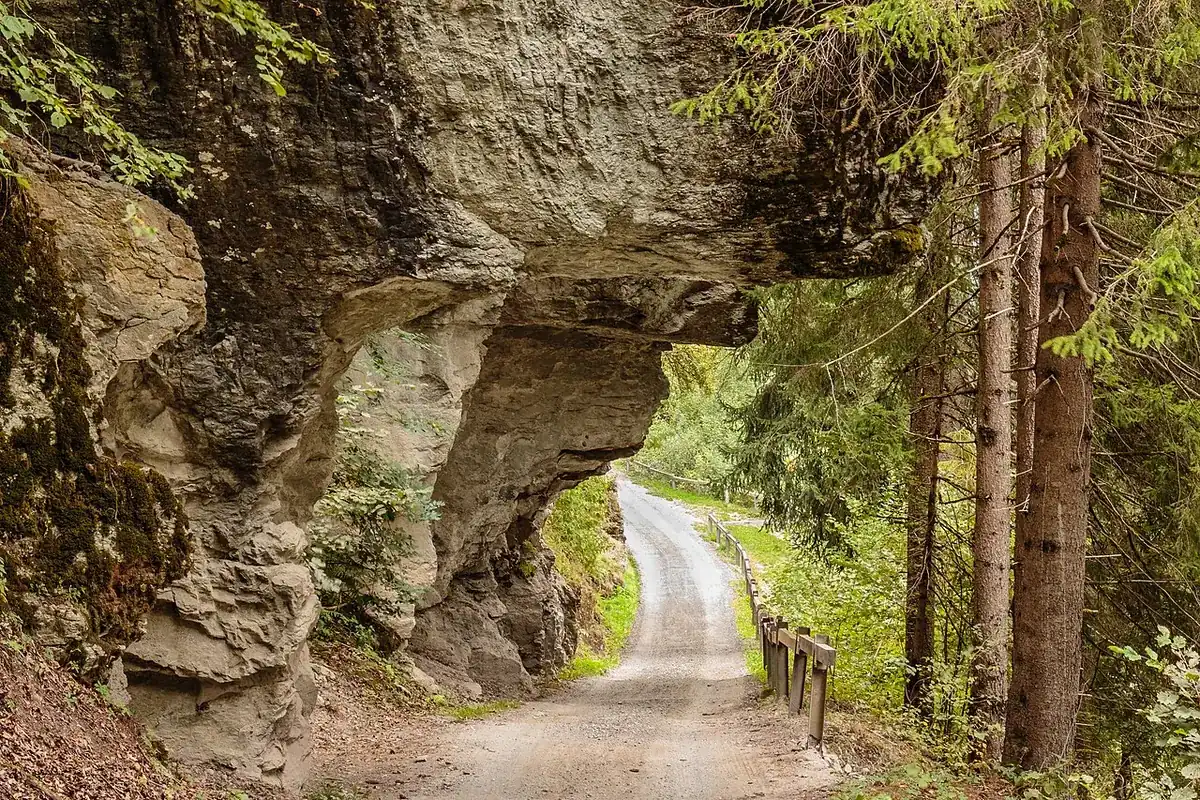
 Photo Agnes Monkelbaan, CC BY-SA 4.0

Natural shelter
Using what is already standing: a rock overhang, a thick stand of tuckamore, the lee of a big spruce or the roots of a blown down tree.
What to look for
- A rock overhang or the lee side of a big boulder
- The root plate of a blown down tree, with a hollow under it
- A big spruce or fir with thick boughs down to the ground
- A thick stand of low tuckamore that breaks the wind
- A steep bank or a hollow out of the wind
- A cabin, a camp or a trail shelter. On some snowmobile trails there are warm up shelters.
How
- Get out of the wind first. Look for the side that is sheltered from it.
- Before you settle in, look up. Check for loose rock, dead trees and hanging branches overhead.
- Clear out the spot and check it for an animal den, a wasps' nest or standing water.
- Put something between you and the ground: boughs, dry leaves, moss, a pack or a pad. Cold ground takes more heat than the air does.
- Close in the open sides with boughs, bark or a tarp to make a small, snug space.
- If you can have a fire, build it in front, out from the rock or roots, not against them. See A fire reflector.
Do and don't
Do
- Stop and make shelter while there is still daylight and you still have strength.
- Keep the space small. A small space holds your heat.
- Mark the spot with something bright so people looking for you can see it.
Don't
- Do not shelter in a dry brook bed, a gully or low ground when rain is coming. Water comes down fast.
- Do not go deep into a cave or a hole you cannot see the end of.
- Do not settle under a dead tree or a leaning one.
Watch for
Danger
- In a thunderstorm, stay out of shallow overhangs and cave mouths and away from a lone tall tree. Lightning can jump across the gap. Get low in thick woods or low ground away from water. See Lightning and storms.
- In deep snow the hollow around the trunk of a big spruce, a tree well, can swallow a person who falls in head first. Go in feet first and know how you will get out.
- Dead trees fall in wind with no warning. In a storm, move away from them.
Notes
The best shelter is often the one already there. Ten minutes of looking can save an hour of building.
Tuckamore, the low, twisted fir and spruce on the barrens and the coast, is close to useless for walking through, but it stops the wind dead. Crawl in on the lee side and you are out of the worst of it.
Updated 2026-09-27
Related
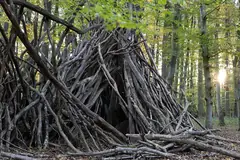 Debris shelter
Shelter
A shelter built with nothing but what is lying on the ground.
 Pitching a tent in wind
Shelter
Getting a tent up and keeping it up when the wind is trying to take it off the barrens.
 Snow shelter
Shelter
Digging in when the wind is up and there is nothing to build with.
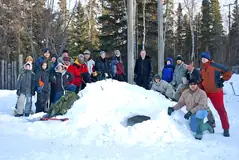 Snow trench
Shelter
The fastest snow shelter there is: a slot dug in the snow, roofed over, out of the wind in under an hour.