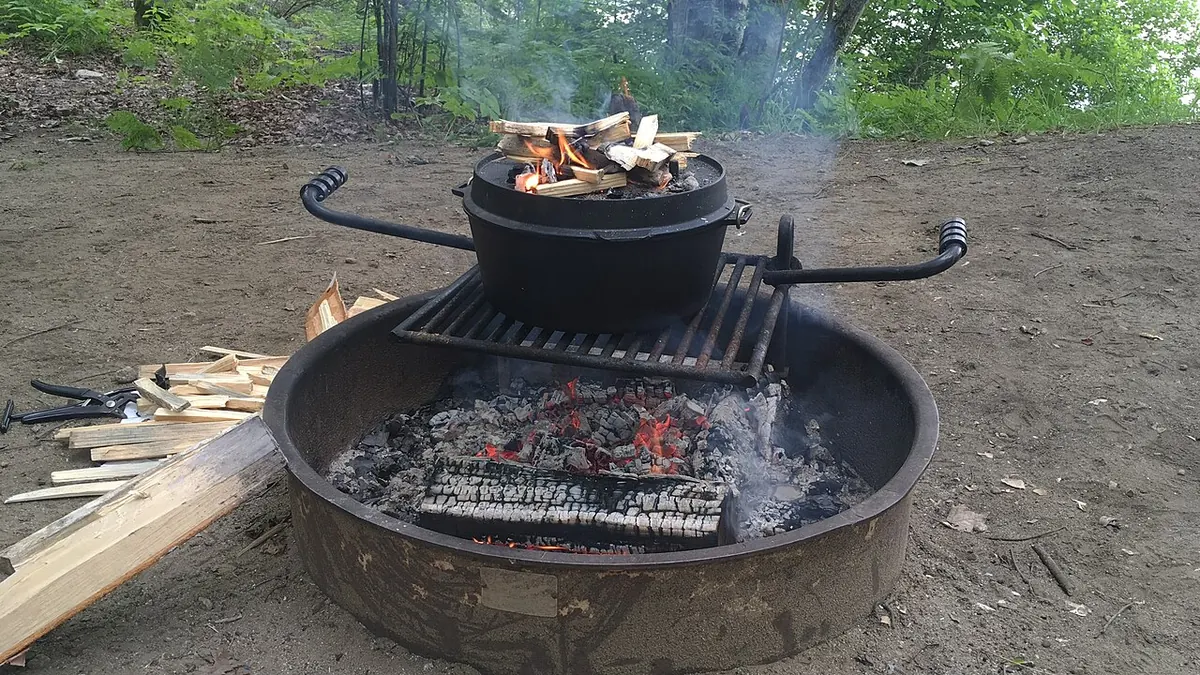
 Photo AntiCompositeNumber, CC BY-SA 4.0

Dutch oven cooking
Baking, stewing and roasting in a heavy cast iron pot with coals under it and on the lid.
What you need
- A cast iron Dutch oven with legs and a flat lid with a rim to hold coals
- A good bed of hardwood coals, or charcoal briquettes
- A lid lifter or pliers, and heavy leather gloves
- A small shovel or a stick to move coals
- A flat patch of bare ground or rock, clear of anything that can burn
How
- Burn the fire down to a good bed of coals. Flames scorch the food.
- Set the pot on a few coals, then put more coals on the lid.
- For baking, put more heat on top than below. For stews and frying, put most of it under the pot.
- Every fifteen minutes or so, turn the pot a quarter turn one way and the lid a quarter turn the other. It stops hot spots.
- Lift the lid straight up so ash does not fall into the food.
- Add fresh coals as the old ones die down on a long cook.
- Clean the pot while it is still warm, dry it over the fire, and wipe on a thin coat of oil.
Do and don't
Do
- Heat the pot before you put bread or biscuits in.
- Keep a pot of water by the fire in case a coal gets away.
- Carry the pot by the bail with gloves on.
Don't
- Do not pour cold water into a hot cast iron pot. It can crack.
- Do not leave food or water sitting in the pot overnight. It rusts.
- Do not burn charcoal inside a tent, a cabin or any closed space. See Propane and carbon monoxide.
Watch for
Danger
- The pot, the lid and the bail get hot enough to burn through a glove. Use a lifter.
- Coals set on dry grass or duff can start a ground fire. Put them out cold when you are done. See Putting a fire out.
- Too much heat under bread burns the bottom long before the top is done.
Notes
A Dutch oven is heavy, so it suits a cabin, a canoe trip or a camp you drive to, not a long walk in.
Bannock, beans, moose stew and a fruit crumble all come out well in one. See Bannock.
Updated 2026-09-28
Related
 Bannock
Camp Cooking
Camp bread from a bag of flour, in a pan over coals or wrapped on a stick.
 Cooking on coals
Camp Cooking
Cooking on a fire without burning the outside and leaving the middle raw.
 One pot meals
Camp Cooking
Hot food from one pot, with what keeps in a pack and what to do when the fire is only coals.
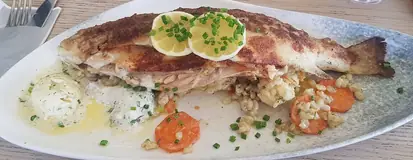 Cooking trout
Camp Cooking
Pan fried, in foil or on a stick: three ways to cook a fresh trout over a fire and know when it is done.