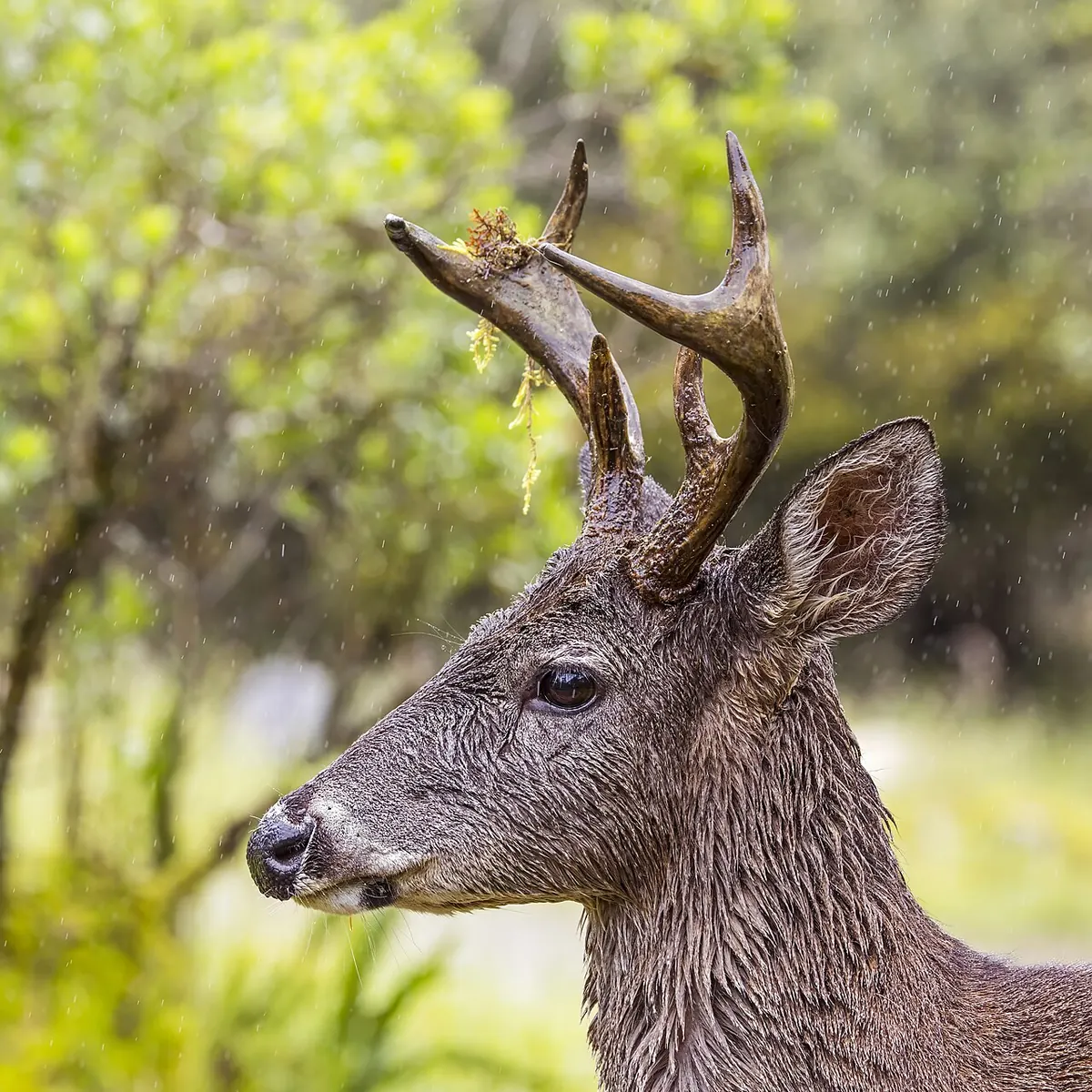
 Photo Charles J. Sharp, CC BY-SA 4.0

Shot placement and the follow up
Where to put it, when to wait, and how to track what you hit.
What you need
- A rifle you have sighted in this season
- A rest, a sling or a tree to steady on
- Flagging tape to mark the spot
- A headlamp and spare batteries
- Knife, gloves and a saw for what comes after
How
- Take the broadside shot. Behind the shoulder, a third of the way up the body, is lungs and heart and it puts the animal down fast.
- Let a quartering away shot come through into the far shoulder. Pass on quartering toward you unless you know exactly where the bone is.
- Do not take the shot you are not steady for. There is another day.
- Mark where the animal stood and where you stood, then look and listen before you move. Watch the way it ran and pick a landmark on that line.
- Wait. Half an hour on a lung hit, longer on a gut hit. Pushing a wounded animal drives it miles.
- Take up the blood in daylight if you can, marking every sign with tape so you can work back to the last one you are sure of.
Watch for
Danger
- Know what is behind the animal before the safety comes off.
- Bright frothy blood is lungs. Dark blood with gut matter means back off and wait it out.
- Hair at the hit tells you where you struck. Look at it before you follow.
- Tag it and report it the way the licence says, and know the season and the area you are in.
Notes
A clean kill is the whole job. If you cannot make that shot from where you are, you close the distance or you let it walk.
Updated 2026-09-05
Related
 Calling moose
Hunting
Bringing a bull to you in the rut with a cow call, a grunt and a bit of noise in the brush, and where to sit while he comes.
 Field dressing
Hunting
Getting the animal opened, cooled and clean before the meat turns.
 Hanging and cooling meat
Hunting
Getting the heat out of an animal fast and keeping the meat cool, clean and dry until it is cut up.
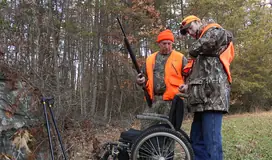 Hunter orange and being seen
Hunting
Being seen by other hunters is the cheapest safety there is. What to wear, and how to move and carry game in the fall woods.